
Check out our video review:
Katamari is a series of roll-em-ups. Your character pushes a ball called a “katamari” around environments and objects stick to it. The main goal is to grow it as big as possible and most of the time as fast as possible. When I hear myself say that, the concept doesn’t sound very fun but the games certainly are. It’s definitely a unique series that can be relaxing and challenging and in my opinion, euphoric at times. I can’t say any of the main games up to this point have been bad although I am slightly disappointed with Beautiful Katamari. It’s more of the same and I don’t like the way the DLC is handled but, nevertheless, I still enjoyed my time with it overall and have been looking forward to the next entry, Katamari Forever. Developed by Genki and published by Namco Bandai Games, Katamari Forever was released for PlayStation 3 in September, 2009. According to the internet, it’s known in Japan as Katamari Damacy Tribute and I think the word “Tribute” is fitting considering the game feels like a “best of” compilation, like a greatest hits album so to speak.
The story goes that the King of all Cosmos gets hit on the head and suffers from amnesia and a robotic version of the king called RoboKing, created by the Prince and his cousins, destroys all the stars in the sky. This is yet another absurd story with Katamari’s unique brand of humor and surreal elements and the stages here are split between the King and RoboKing. Half of the stages take place in the mind of the King and are from previous games, an effort to restore his memory. The other half are set in the present and most of these are also not new, and it’s up to the Prince and his cousins to roll stuff up to recreate the stars.
Many stages are basically pulled from previous games, objectives and all. Because the King is suffering from amnesia, the idea is that completing these stages restores his memory. There’s over thirty stages total and only a few them are actually new. As you can probably guess, Katamari Forever isn’t bringing a lot of new stuff to the table. It’s just more of the same. All the mechanics return, the point system returns, the same environments return, and the same objectives return. Veterans of the series will feel right at home but may also be disappointed with the lack of new content.
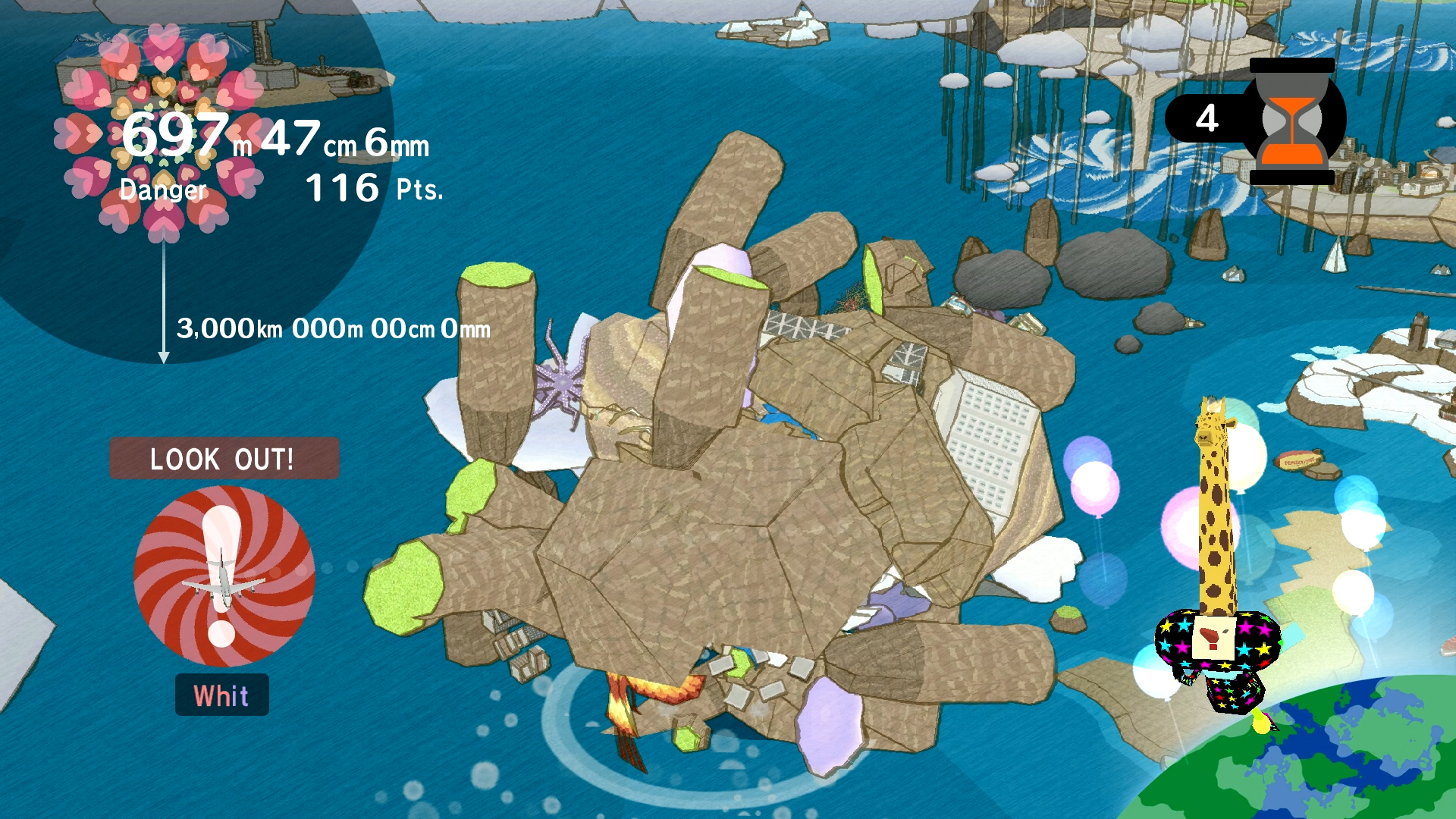
Despite Katamari Forever mostly feeling like a rehash, if you enjoy the previous games or the series gameplay in general, you’ll undoubtedly enjoy this. It’s the same Katamari gameplay you know and love, it just doesn’t do much of anything we haven’t seen before. However, it does introduce some new features which I actually welcome. The first is the hop. By flicking the controller up or by pressing a button, you can make your character and Katmari hop or jump which proves to be quite useful. The second new feature is the “King Shock” ability or what I call the magnet power-ups found in the stages and there’s two kinds. One will instantly suck in any surrounding objects that will stick to the Katamari and the other will attract nearby objects as you push the Katamari around but only lasts for a limited time. These are actually quite significant and I found they make it easier to achieve one hundred or more points in the stages.
Just like the previous games, you take control of the Prince or one of his cousins and push Katamaris around the stages. Each stage offers an objective to complete and you can earn points based on your performance and/or what you roll up. Getting through all the stages isn’t all that difficult but, in my opinion, earning one hundred or more points in each one and in each game mode is one of the most challenging aspects of the game. The Village Square acts as the hub area in this entry and this is where you can access your collection, change cousins, equip accessories, and access the stages. Cousins are unlocked by rolling them up in the stages and you can also find and roll up presents which unlock accessories to equip the characters with. All the items you roll up are added to your collection and I do consider Katamari Forever to be a collect-a-thon.

Considering most of the stages are not new and the fact that half of them are just pulled from previous games, there’s really not much to say that hasn’t been said in our reviews of the previous games. There are some changes here and there like to time limits for example and the hop and magnet power-ups can make things a little easier in some respects but the game really does feel like a greatest hits compilation. On the plus side, with over thirty stages, there is plenty to see and do. You can still unlock Eternal mode for many stages and now you can unlock Classic mode and Drive mode where you simply move around much faster and are given less time to complete objectives.
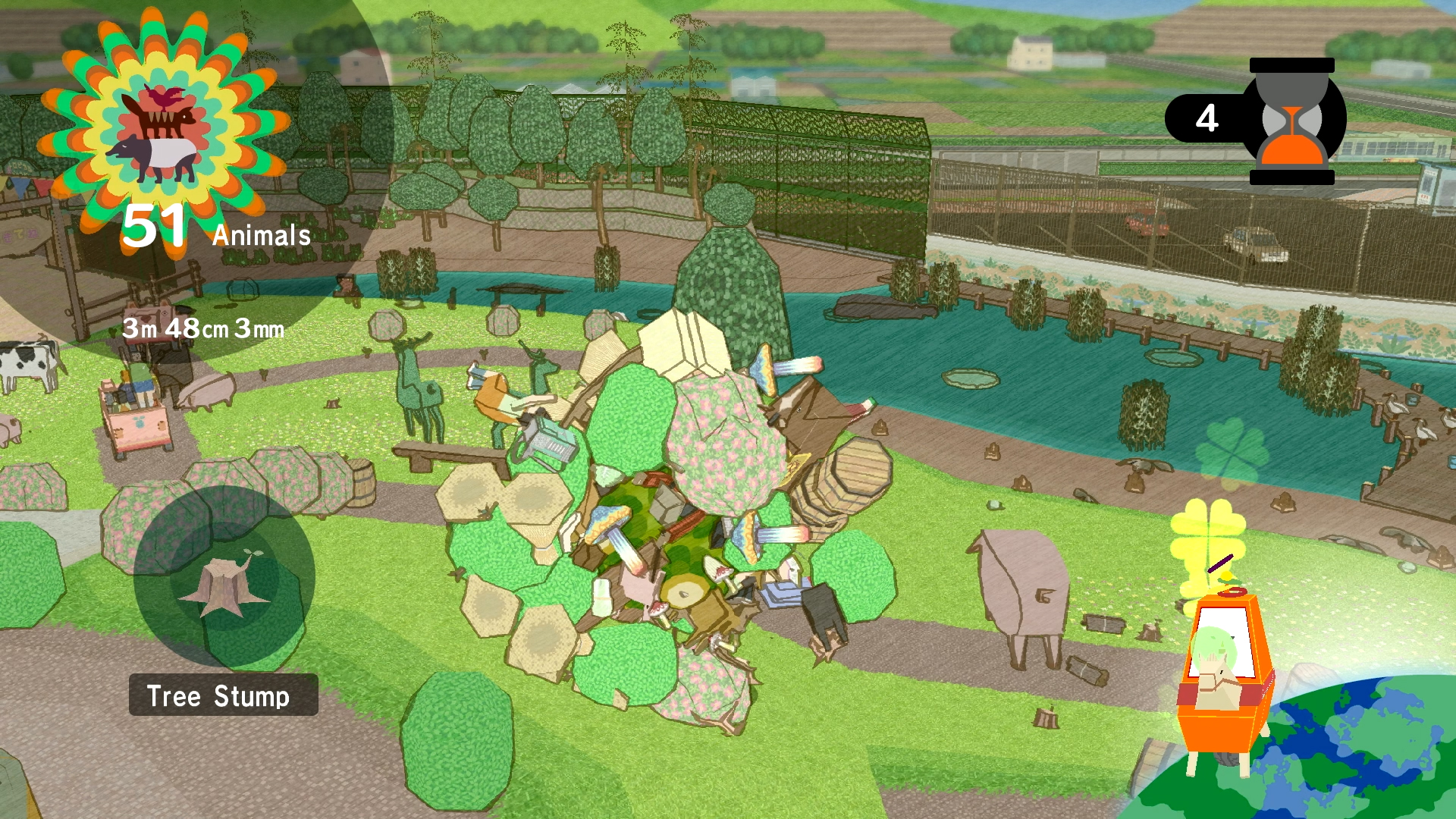
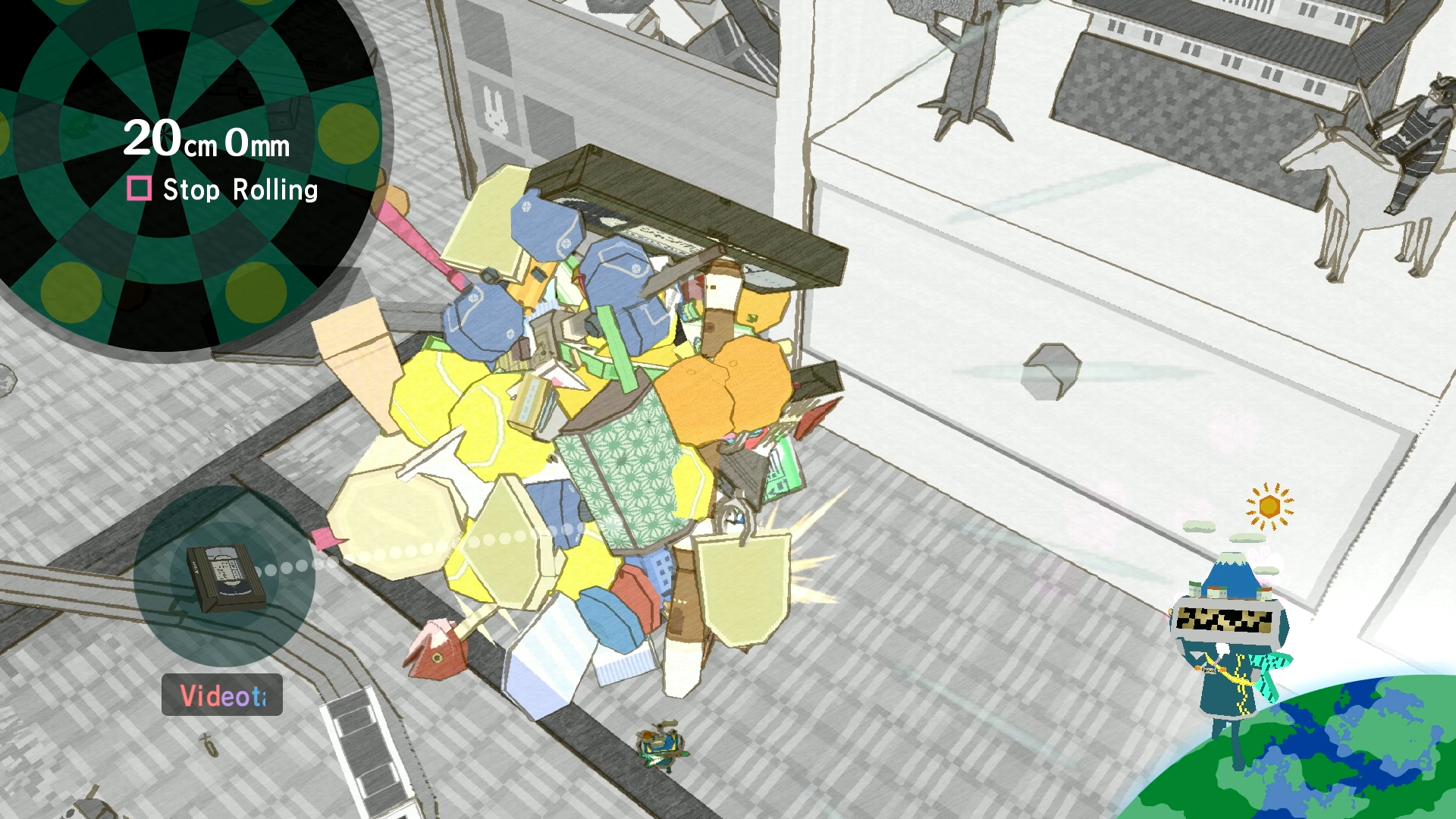
Katamari Forever retains the series unique style and does include multiple visual filters that you can switch between including cel shaded and colored pencil among some others. The stages for the King are often presented in black and white and you restore color by rolling up items. Overall, the visual presentation as a whole is very nice and pleasing on the eyes and offers different options. As for the soundtrack, it’s not my favorite in the series but does include a bunch of remixed songs from previous games so it’s certainly not bad. You can expect a lot of catchy and memorable tunes. On the technical side, the frame rate does dip frequently but other than that, I encountered no major issues.
I actually really enjoyed my time with Katamari Forever. I’m aware that most of it is basically content pulled from the previous games but I enjoy the previous games. There’s plenty of stages here, multiple game modes, and I welcome the hop mechanic and magnet power-ups. It features the same Katamari gameplay I fell in love with along with some new features and plenty of content. In general, there’s plenty to see and do. It’s only a shame it doesn’t offer many new sights or things to do. Nevertheless, it retains the addictive and somewhat relaxing gameplay qualities. It can be addictive trying to roll up as much as you can to grow the Katamari as big as possible and I find doing that can be relaxing and somewhat euphoric. Many of the objectives offer fun challenges and trying to earn one hundred or more points in every stage can keep you occupied for a while. There’s plenty here to keep you coming back.
I absolutely recommend Katamari Forever. It is a bit of a shame that a majority of the stages are taken from previous games and it doesn’t really bring many new ideas to the table. But that doesn’t stop the gameplay from being fun and it’s nice having some of the best content the series has to offer in one package. I feel Katamari Forever does make a great gateway for newcomers, as do most of the games in the series, and much like its predecessors, it’s easy to pick up and play and offers plenty of content. Definitely check it out.