
Check out our video review:
The Strike series was pretty popular back in the day but I never got around to checking any of the games out when they were in their prime. I know I tried Desert Strike (and possibly Jungle Strike as well) at some point, and I’m quite certain I was playing them entirely wrong. Developed and published by Electronic Arts, Desert Strike: Return to the Gulf was released for the Genesis in 1992 and over the years, it has been ported to numerous systems. For this review, I played the Genesis version. I’ve seen these games described as shoot ’em ups and I suppose that’s accurate but I think they definitely fall under the tactics and strategy umbrella. Maybe tactical shoot ’em up is more apt.
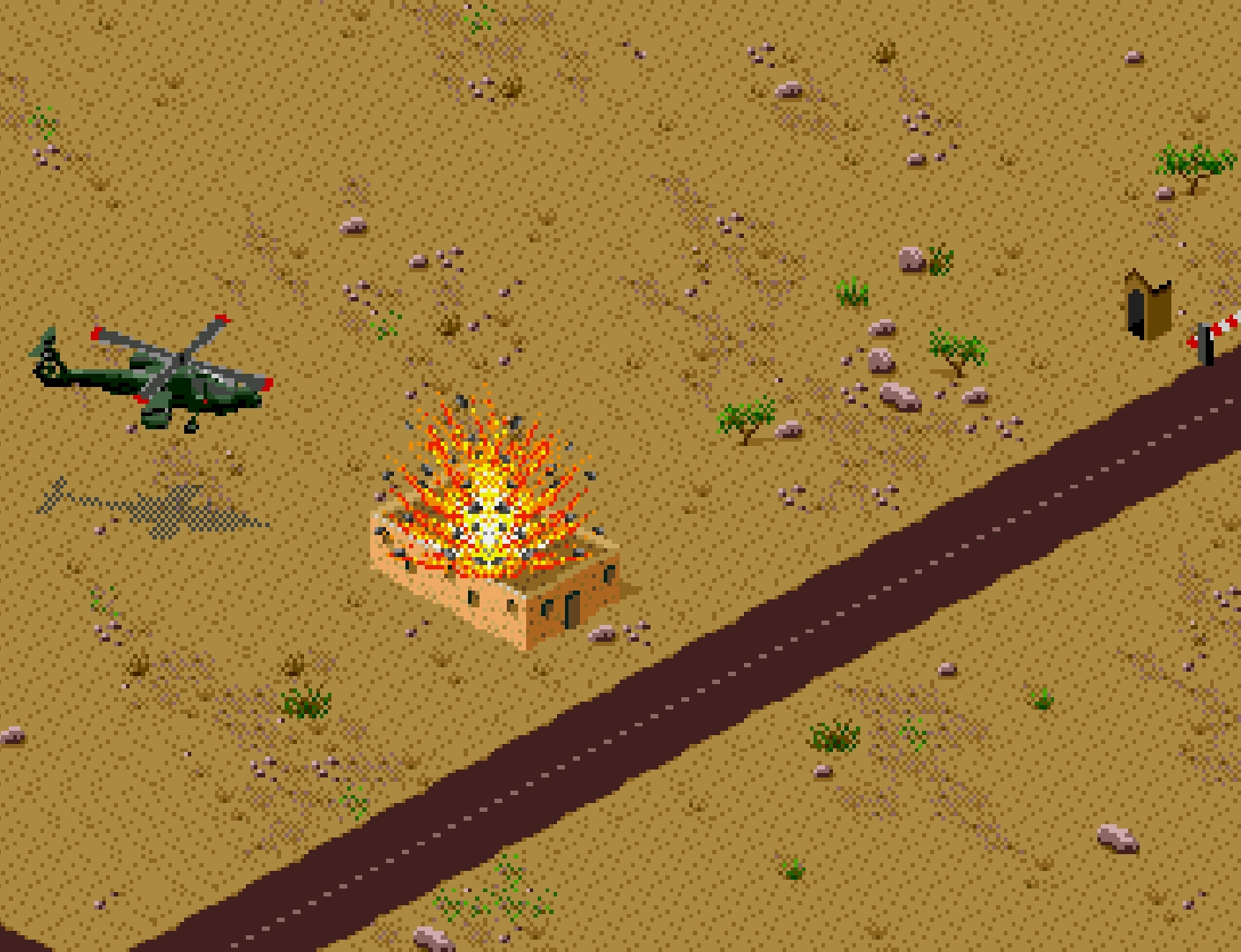
The story goes that terrorist leader, General Kilbaba, invades a small but wealthy emirate and begins building up military weapons and installations so the United States responds by sending a chopper team to deal with the situation. The plot is conveyed through cut scenes and text and isn’t super deep or anything but is obviously influenced by the Gulf War which I think is interesting, especially for the time this game released.
The plot plays out in campaigns and there’s four total and each one could be considered a level. That said, Desert Strike isn’t technically a long game. That is if you can manage to get through all four campaigns in a single sitting. It can be a very challenging experience. On the surface, Desert Strike looks like an isometric shoot ’em up. You pilot an apache helicopter around environments, shooting and blowing things up. And if you play it like that, going in all guns blazing without understanding what you’re really supposed to be doing, you will most likely die and struggle to progress. Desert Strike is game that requires thinking and planning and patience. The gameplay does encourage tactical and strategic thinking and you need to be mindful of your ammo and fuel.
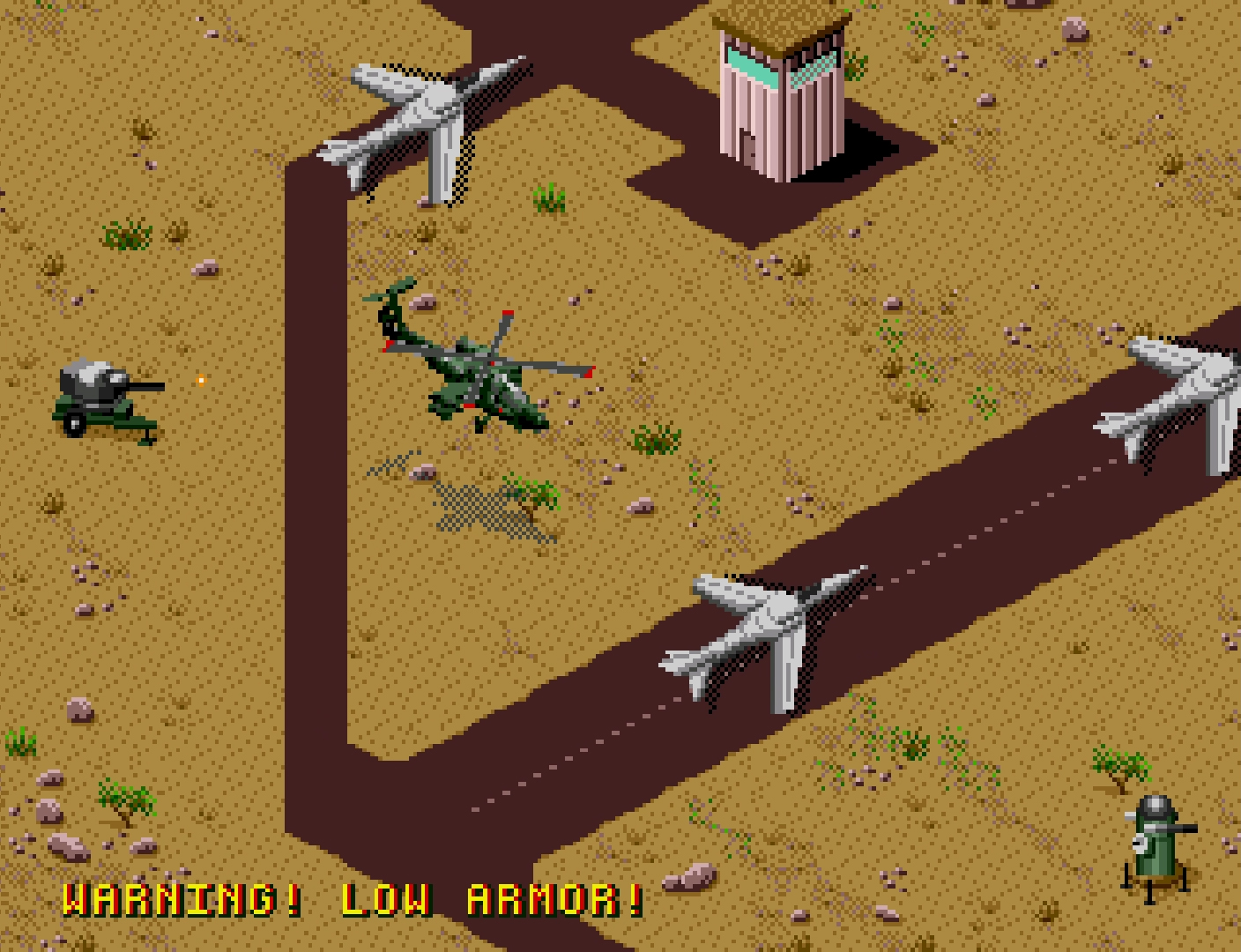
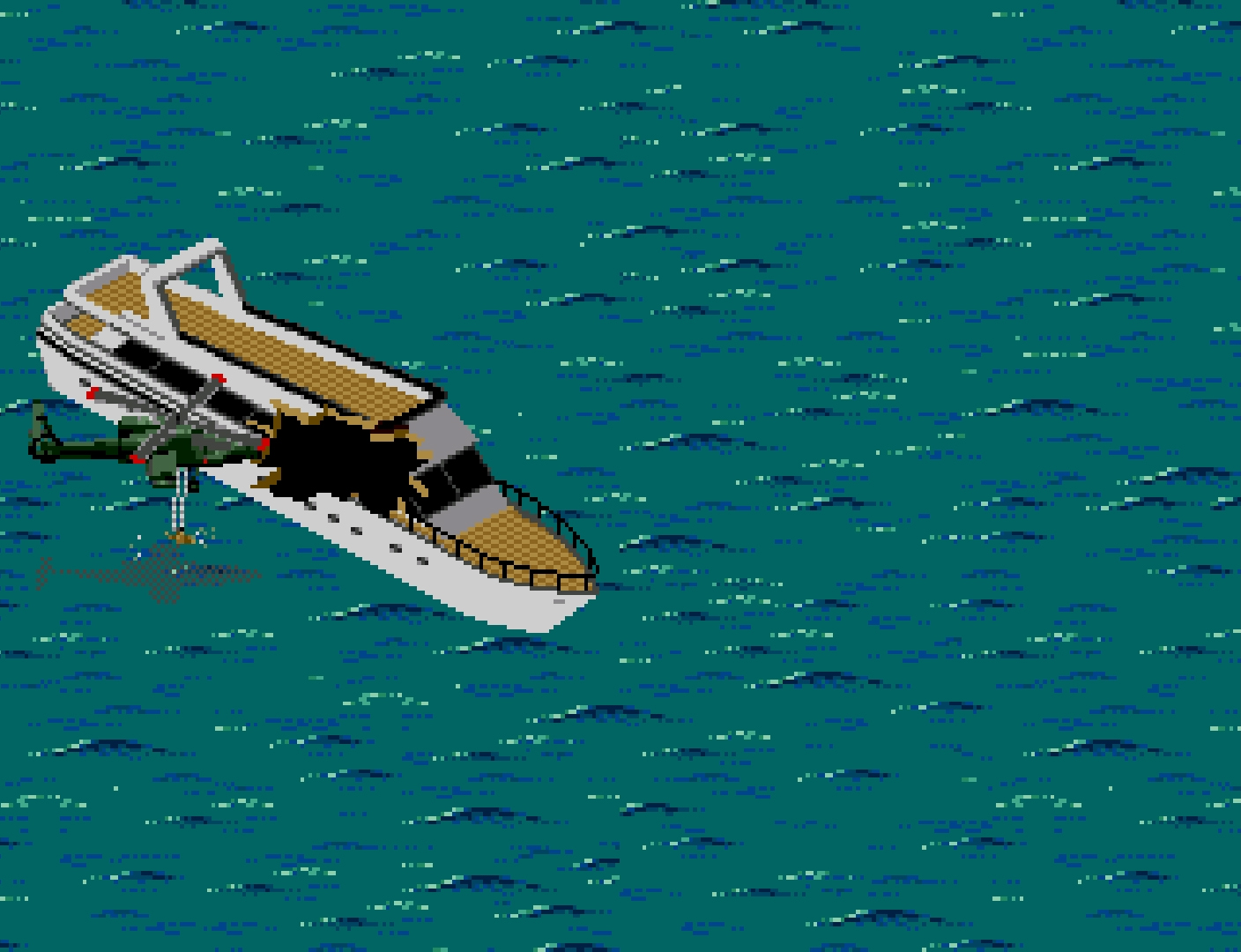
Desert Strike does use a password save system and before jumping into a campaign, you have the option to select one of multiple copilots, all of which have their own strengths and weaknesses, and some do need to be found and rescued before they can be selected. Every campaign begins with the helicopter on a frigate and when all missions are completed, you must return to the frigate to complete the campaign. Some important things to know is that if your helicopter’s armor is depleted, it crashes and burns and you lose a life. If it runs out of fuel, it crashes and burns and you lose a life. Lose all your lives and its game over. The helicopter is armed with a chain gun and can fire hydra and hellfire missiles and you do have a limited amount of ammo for each one. You can replenish fuel from fuel barrels and ammo from ammo crates found in the environments. Another thing to know is that when you lose a life, your ammo is not replenished upon respawn. Also, you can replenish armor by dropping people off at landing zones.
Every campaign or level consists of multiple missions to complete. Most of them have you destroying things and rescuing and capturing people. You must complete all the missions to complete the campaign. But what’s cool is the freedom you’re given. Every campaign is set in an open environment and you can fly around it freely and go anywhere you want. For a 1992 game like this on a home console, I think its pretty impressive. Not only that, you can complete missions in any order and completing certain ones can make others easier. There’s no HUD on the screen, I’m guessing in favor of better performance. However, you can pause the game at any time to view how much armor, fuel, and ammo you have as well as your missions and a map of the environment. The map will show you the locations of targets, landing zones, and where you can find fuel and ammo. Not all mission targets are visible on the map and may require intel which you will have to acquire.
While there’s a lot of cool things about Desert Strike, the punishing gameplay may not be for everyone. You can expect to see your helicopter blow up, see the game over screen, and even fail missions often. It can take quite a bit of time just to complete one campaign or level. Enemies include ground troops, vehicles, helicopters, and missile launchers. Enemy troops can often be seen on rooftops and sometimes they’ll shoot at you from towers. You want to use the best weapon for the threat and sometimes ignoring threats and just simply avoiding damage as you fly to your destination is the way to go. Remember, you have to be mindful of your ammo and certain weapons can make completing certain missions easier.
I learned pretty quickly that conserving ammo is important. Every shot counts. You don’t want to consume all your hydra and hellfire missiles on every threat in sight on the way to a destination only to struggle against enemies later on while trying to complete a mission. Furthermore, you have to be mindful of fuel and you will be alerted when you’re running low. It drains as you fly around so stopping to engage every enemy may not be worth the fuel cost. Basically, you have to plan out your approaches and figure out the best and most efficient ways to complete missions. What routes to take, what enemies to prioritize, and you should definitely know where fuel and ammo pickups are located. It is a trial and error experience but the challenging gameplay can result in a sense of reward when you do complete a mission or campaign, especially after failing repeatedly. You just need to have the patience to keep going. You are scored based on your performance in each campaign and points will be subtracted if you kill innocent people or destroy civilian buildings.
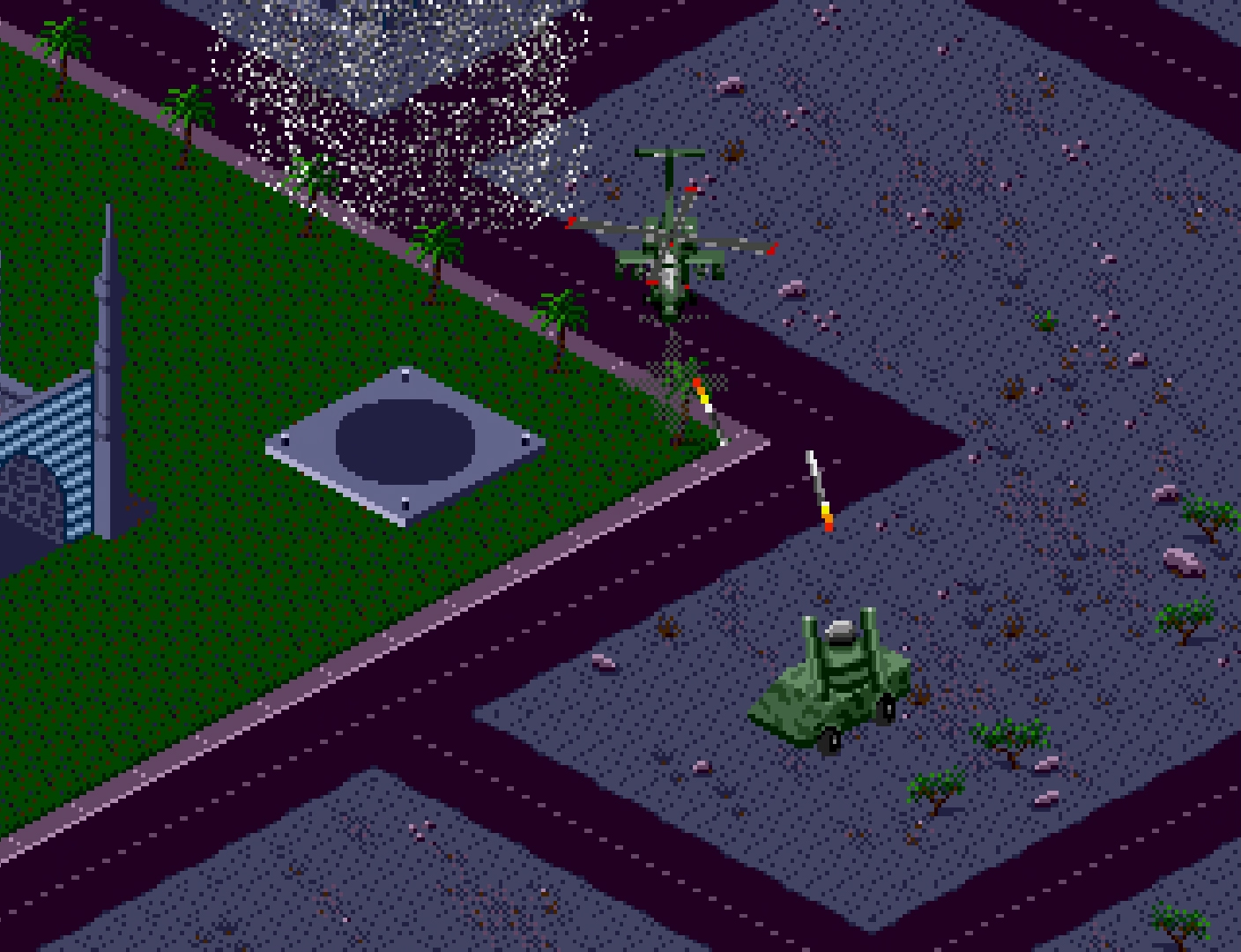
I do have a couple of complaints and I admit they are probably the result of being spoiled by modern game conventions. The first is that without a HUD, I found myself constantly pausing the gameplay to check on my resources and to see if I’m going in the right direction and it became a tad irritating after a while. Second, how strafing works. There are multiple control options to choose from and I preferred the “From Above” option and for the most part, the helicopter controls great. However, on the Genesis controller, strafing is defaulted to the A button which also fires the hellfire missiles. I’m not a big fan of this but I can let it go considering there’s not many other options. You hold down the button to strafe and tap it to fire the missiles. I don’t have the manual so I had no idea strafing was even a thing you could do. But one day I thought to myself strafing could make avoiding projectiles easier so I searched Google to see if it’s possible and lo and behold, it is. From that point on, the whole experience changed for me. I was strafing like a madman and never looked back. And my helicopter still got blown up and crashed and burned repeatedly because this game is fucking brutal. Shortly after I learned how to do it, I looked up the manual and it does tell you how to strafe, called “jinking”. Anyway, here’s my real problem with it. Being tied to the A button and having to hold it down to strafe or “jink” means you can’t easily strafe and fire hellfire missiles simultaneously and it also makes trying to fire the other weapons while strafing feel a bit awkward.
As the name implies, you’ll be flying around desert environments along with sea areas where the frigate is located. The land areas are populated with sand dunes, roads, buildings, vehicles, and various military weapons and installations. I can’t say there’s a lot of visual variety but each campaign is set at a different time of day. It’s the mission variety that’s impressive. You may have to destroy some of the same things in multiple campaigns but how you go about it will most likely be different every time. Plus, some missions are layered which I think is pretty cool for the time this game released. For example, one requires you to rescue people held captive in a building so you have to clear the defenses and the people will pile into a bus and you have escort it as your copilot drives it to safety. Some areas are designated as danger zones which basically means more dangerous enemies ready to fuck your shit up, or in other words you need to be extra careful. Pickups include fuel barrels and ammo crates as mentioned earlier and you can also come across extra lives. Some pickups are only revealed by destroying things like buildings or sand dunes.
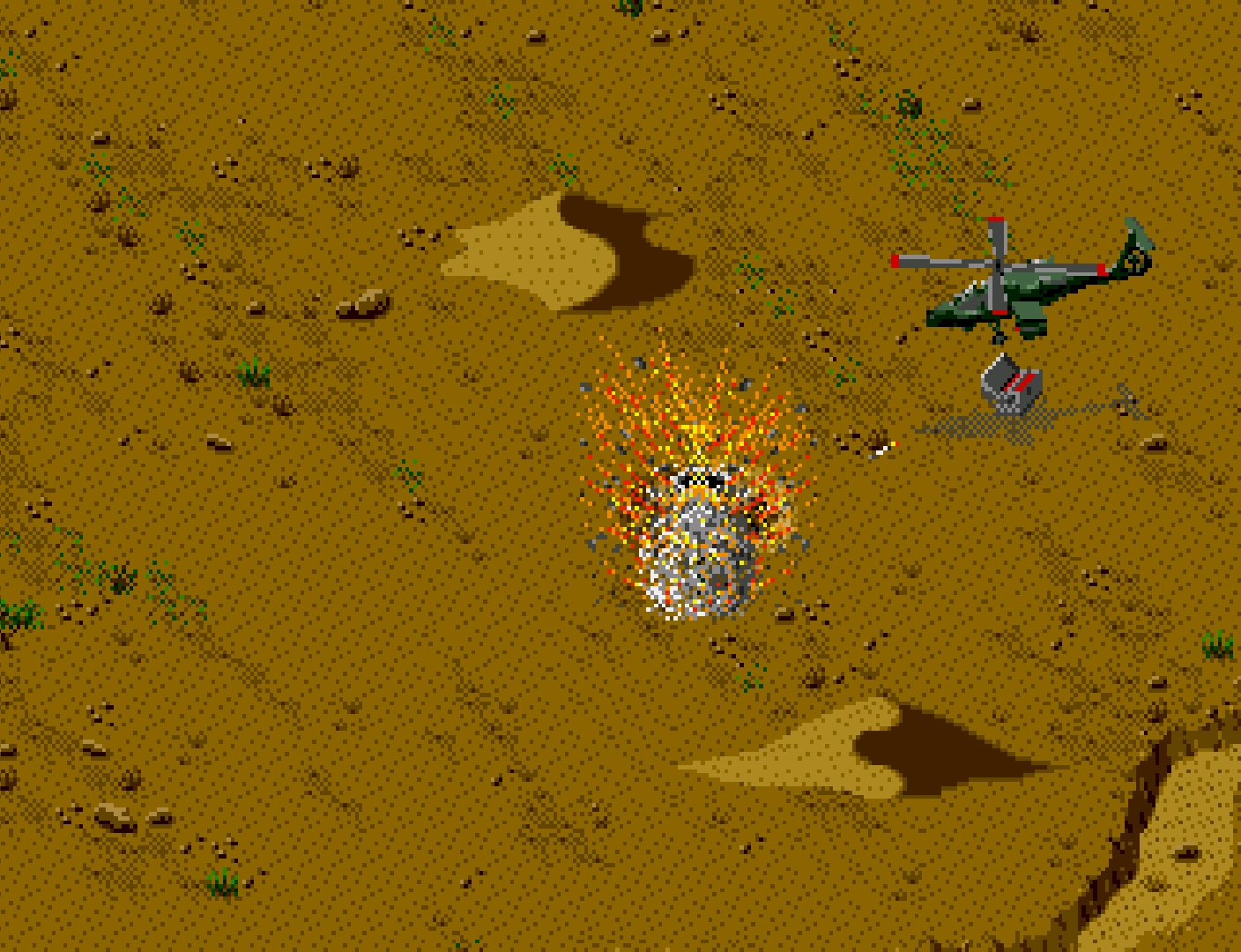
I think Desert Strike’s presentation was pretty good for its time. I like the apache and enemy models and the frigate showcases a good amount of detail. The environments do successfully convey that desert look and feel complete with a lot of brown, sparse trees and foliage, rocks, and rock formations. I do wish the explosions looked more spectacular considering you’ll be destroying a lot of shit and see them often. But otherwise the action on display looks and feels solid and killing baddies and blowing stuff up does feel satisfying and the sound work gets the job done. There is no music heard during gameplay but the tunes heard at the main menu and during cut scenes sound pretty good and catchy to me. On the technical side, the game ran fine in my experience and I only noticed the frame rate take a hit when there was a lot going on on-screen.
Desert Strike is a wonderful game and I had a good time with it but you really need to have patience to enjoy it. I’ve heard stories from people about how they would fire this game up as a kid and fly around and blow things up but had no idea what they were supposed to be doing. If you go into this thinking it’s a typical shoot ’em up experience, you’re going to be in for quite a surprise. It requires some thinking and planning. I definitely recommend reading the manual if you have it or look one up online, experiment with the different control options, read the briefings before each campaign, and reference the map and mission information during gameplay as often as you need. Learning the maps is key as is trying different approaches to see what works and what gets you killed. Desert Strike is very much a tactical experience as well as a nonlinear one and the latter is what I think really stands out here. The freedom you’re given to fly anywhere and complete missions in any order. I think it was pretty innovative stuff for 1992 and results in plenty of replay value.
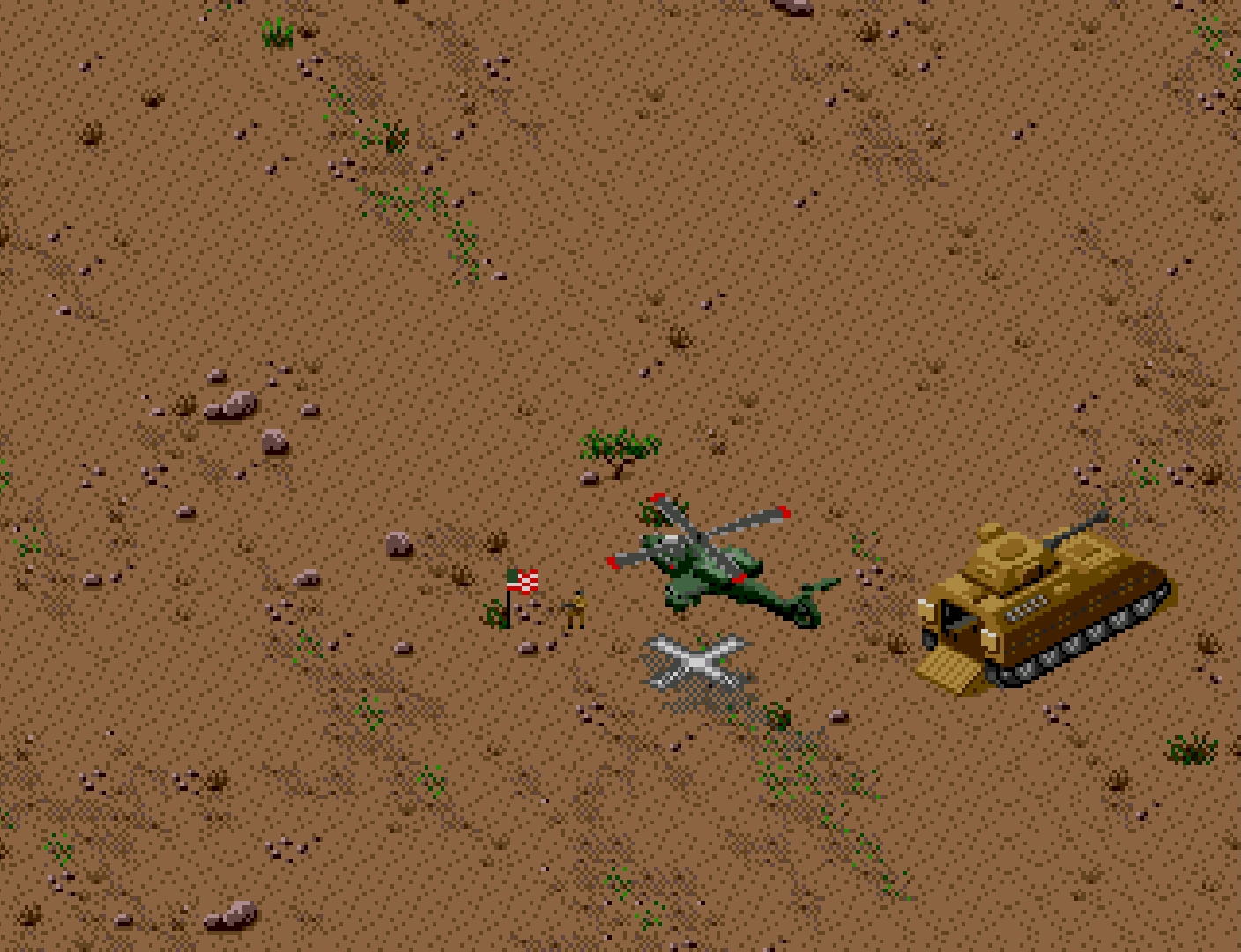
I absolutely recommend Desert Strike. I think in some ways, it was ahead of its time. It showcases some very cool ideas and while the gameplay is unforgiving, it can also be very rewarding. Sure, some aspects may feel dated now but I do think the gameplay holds up well overall and it was popular enough to spawn several sequels. So if you’re looking for a fun tactical action game and have the patience to endure repeated failures, definitely check out Desert Strike.