
Check out our video review:
If you’re looking for a tactical action experience from the 16-bit era, I can’t recommend the Strike series enough. It all started with Desert Strike: Return to the Gulf, a game that takes you on multiple campaigns where you get to fly around in a helicopter and blow away bad guys. It was followed up by Jungle Strike which lets you do it again but with all new campaigns and vehicles. While fun, the games can be brutal if you don’t know how to play them properly. They reward thinking, planning, and patience. The tactical and strategic elements along with their non-linear design made them quite unique in the early nineties. I would even go so far to say they were ahead of their time in some ways. They proved to be very successful resulting in a third entry, Urban Strike. Developed by Granite Bay Software and Foley Hi-Tech and published by Electronic Arts, Urban Strike was released for Genesis in 1994 and it was ported to the Super Nintendo, Game Gear, and Game Boy. Urban Strike aims to deliver the same kind of tactical action experience players fell in love with in the previous games but takes the action to the streets and features some new stuff.
The big bad in Urban Strike is a wealthy media mogul known as H.R. Malone. When his plans to construct a superweapon that would destabilize the United States government are revealed, the Strike C.O.R.E. organization sends in a chopper pilot to deal with the situation. The game plays out in campaigns and the story is conveyed through cut scenes and text and, as expected, the plot here isn’t super deep but there is a connection to the events of the previous game, Jungle Strike. While still militaristic in nature, Urban Strike feels a little more Hollywood in its approach to the story than the prior games. At least I think so.
If you’re a veteran of the previous Strike titles, you should know what to expect here. Urban Strike does retain the core mechanics and gameplay. I consider it a tactical shoot ’em up, a game that rewards thinking and planning. Each campaign is set in a different location and consists of a series of missions to complete. On the surface, it looks as though you simply fly around and shoot and blow shit up. For the most part, that’s true but there’s more to it than just that. Your weapons have limited ammo and you have to be mindful of your fuel. If you don’t know what you’re doing, you will most likely struggle to stay alive and progress. When your armor is depleted, you lose a life. If you run out of fuel, you crash and lose a life. Lose all your lives and it’s game over. This is nothing new. However, Urban Strike is by far the easiest game in the series up to this point which I think makes it the most approachable or accessible entry. That’s not to say there’s no challenge whatsoever because the later campaigns will kick your ass in typical Strike fashion if you’re not careful. But the early campaigns are not quite as tough. Excluding the on-foot areas which suck, I got through the first two or three campaigns without any real issues.
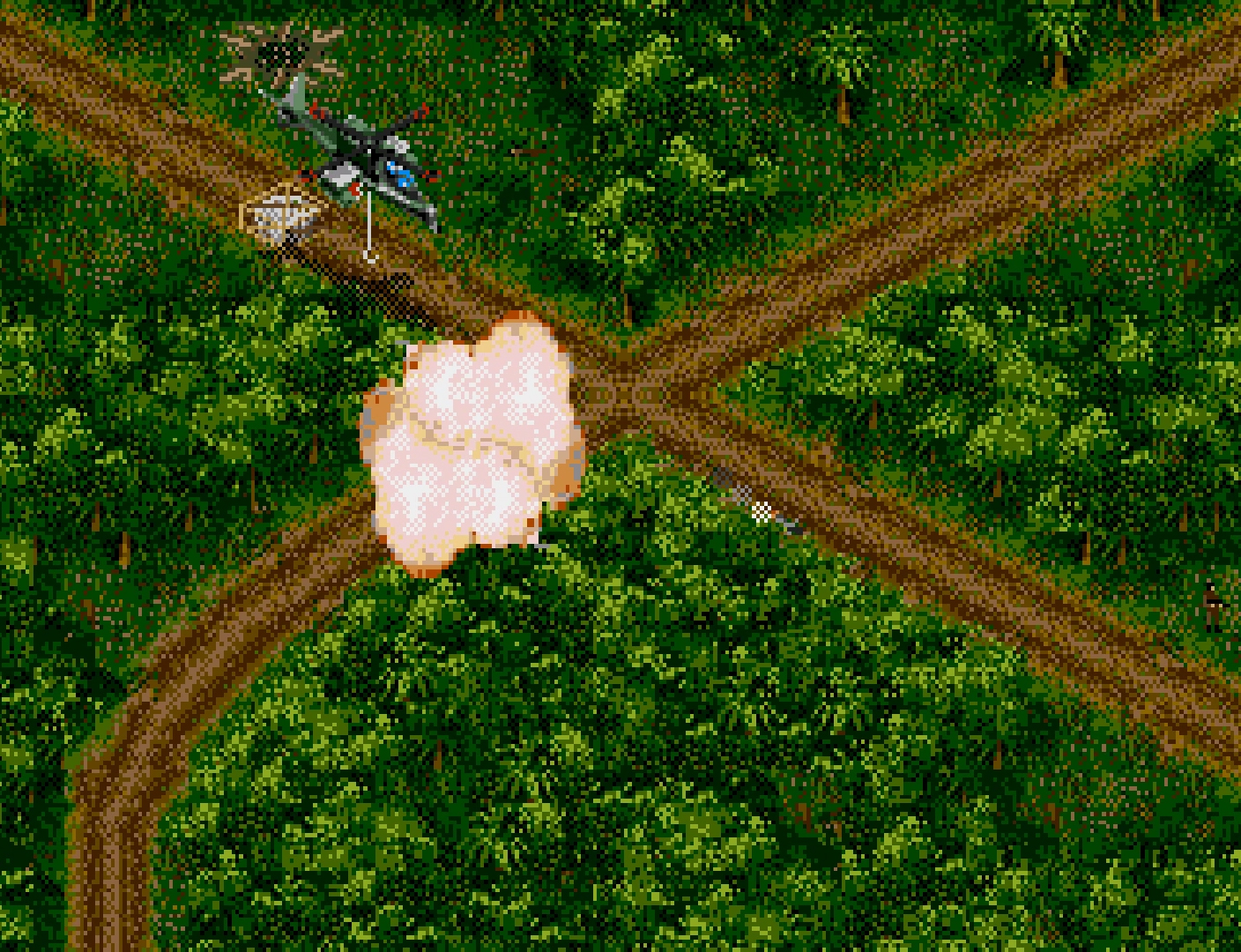
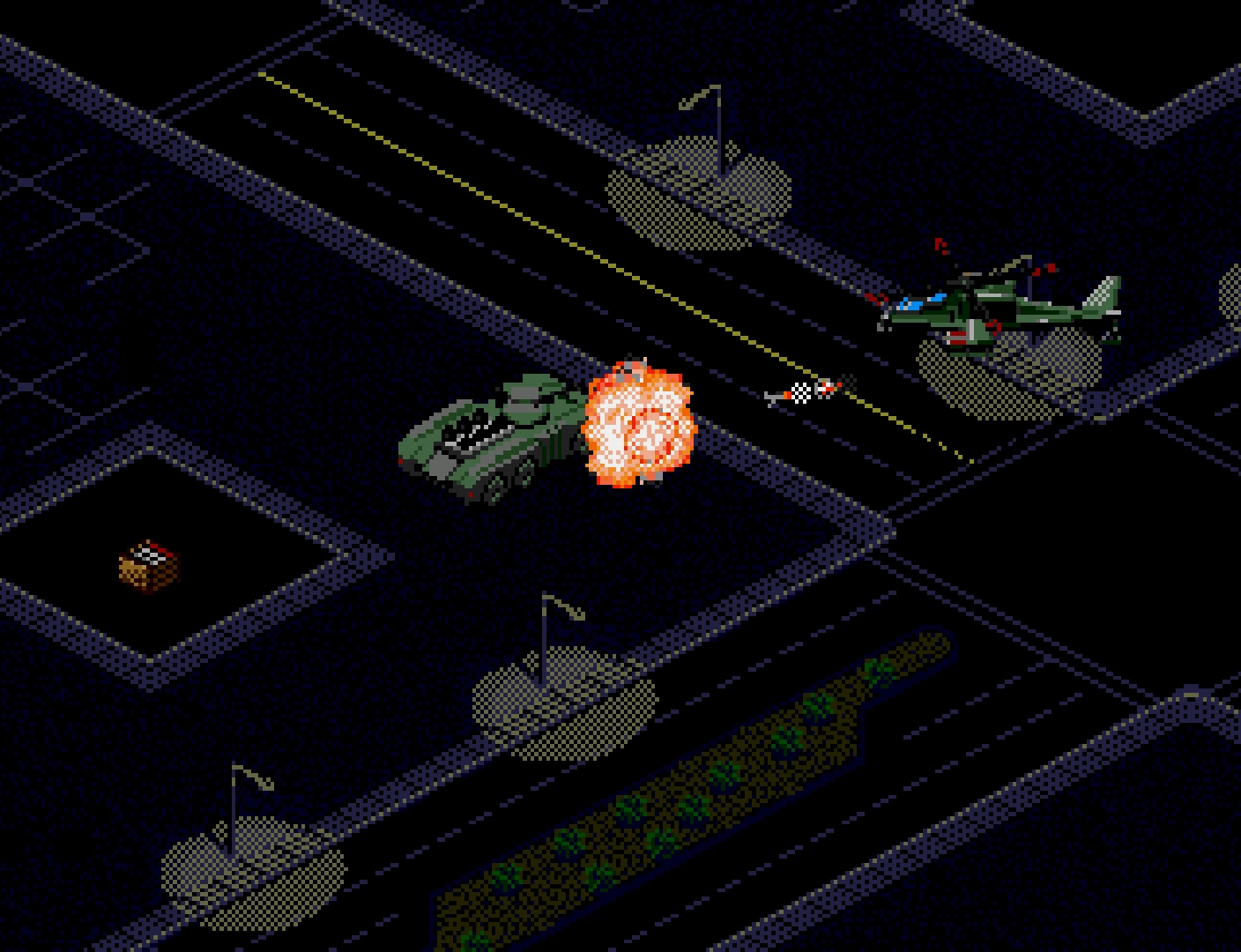
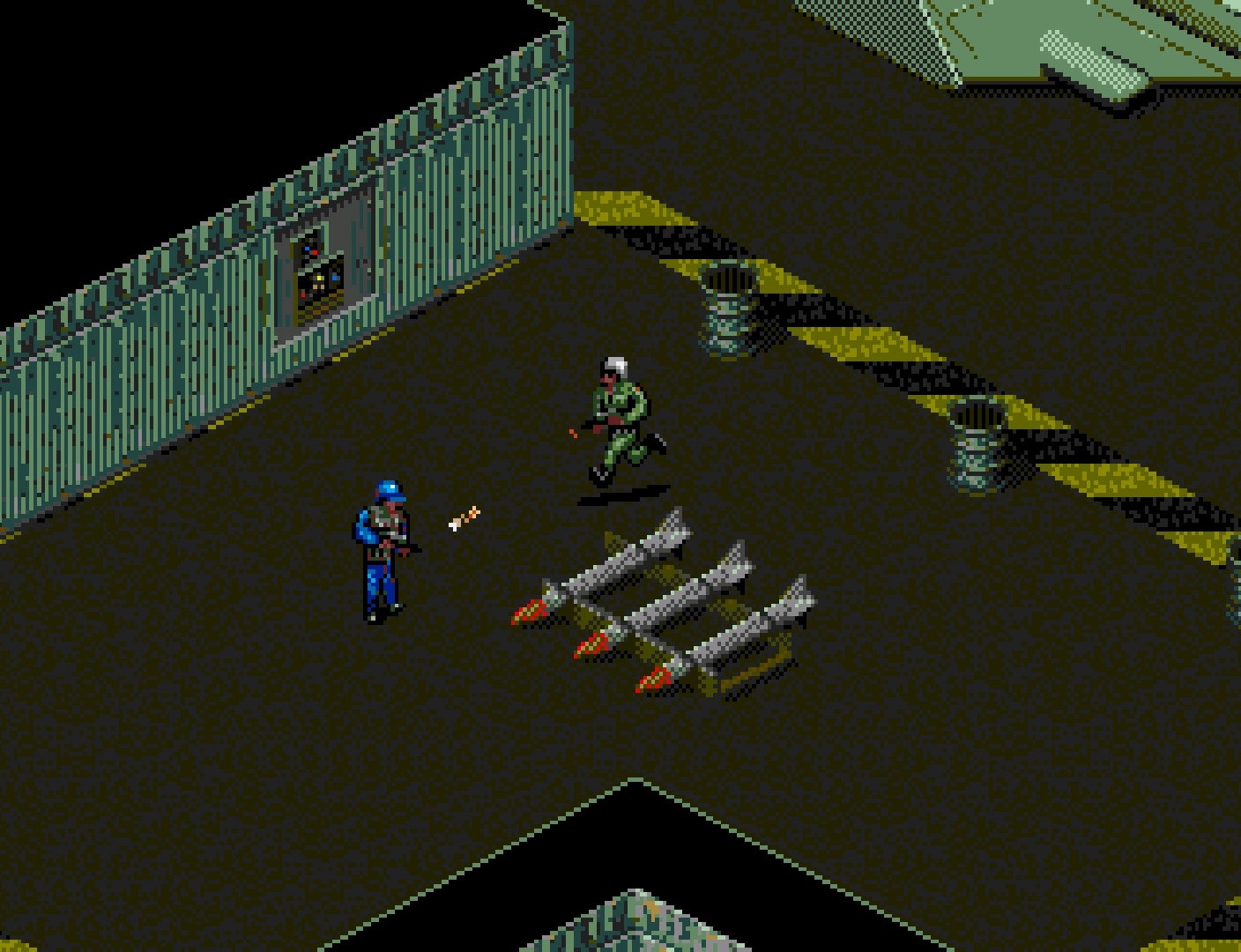
The primary helicopter you’ll pilot in Urban Strike is called the Mohican and certain campaigns will feature other vehicles that you can switch to. Another helicopter called the Blackhawke and a Ground Assault Vehicle. Based on my experience with Jungle Strike and this game, I think the gameplay is much more enjoyable when you’re in the air, or in other words, in a helicopter. I didn’t much care for the hovercraft or motorcycle in Jungle Strike but the Ground Assault Vehicle here isn’t that bad, as brief as your time with it is. What really sucks in Urban Strike is the on-foot areas. In certain campaigns, you’ll have to land the helicopter and infiltrate areas on-foot. You run around and shoot bad guys and blow things up and while that sounds cool, it is in fact awful. Mainly because the on-foot action just isn’t as fun as the helicopter action. It’s not as flashy nor is it as satisfying and you can’t strafe when on-foot and trying to avoid enemy fire feels almost impossible at times. Keeping my distance from enemies and performing hit and runs seemed to be the most effective methods of avoiding damage but these areas are more frustrating than enjoyable. Urban Strike does use a password save system like its predecessors and, luckily, there are passwords you can enter that will start you at the beginning of the on-foot areas. Small mercies, am I right?
On Genesis, Urban Strike retains the control scheme of the prior games and I did play using the “with momentum” control option. When flying a helicopter with the default button configuration, strafing or “jinking” still requires you to hold down the A button which is also the button for firing hellfire missiles when in the Mohican. You tap it to fire them. As a result, trying to strafe and fire weapons simultaneously still feels awkward. But Urban Strike does support the 6-button Genesis controller and when I discovered this I initially thought it was going to alleviate some of the awkwardness. It doesn’t. In fact, I think it’s worse. You hold down the X button to strafe but trying to fire weapons while strafing like this feels even more awkward. I think it’s just because of the way the controller is designed and buttons are laid out. In the end, I stuck with the 3 button configuration.
Once again, you can select a copilot to join you before starting a campaign. Some do need to be found and rescued before they can be selected and each one has their own strengths and weaknesses. Urban Strike features the most diverse locations in the series yet including Hawaii, New York City, San Francisco, Las Vegas, and Mexico. Each campaign consists of multiple missions and much like before, you’ll be required to destroy things and rescue and capture people but there is slightly more mission variety here. You’ll have disarm bombs and airlift cargo and you can even pick up and drop bombs on enemies. You can reference a map at any time to see mission locations and where pickups like Fuel, Ammo, and Armor Repairs are located. You can also come across extra lives. Some mission targets are not visible on the map, requiring intel to be revealed.
All maps are open-ended so you can fly around them freely and complete missions in any order. This type of non-linear design allows you to experiment with different approaches and strategies, resulting in plenty of replay value. While you have freedom, flying around aimlessly or engaging every enemy you come across will only drain resources like fuel and ammo. The idea is to figure out the best and most efficient ways to complete missions. To know what routes to take, what enemies to prioritize, and where pickups are located. This will require patience, thinking, and planning and will be a trial and error experience. It’s also what makes these games so much fun. Figuring out the optimal strategy for completing missions and campaigns and when you finally do complete one you’ve been struggling with, it’s immensely rewarding. But as I mentioned earlier, I do feel Urban Strike is easier than its predecessors only because the early campaigns are nowhere near as tough as the later ones or those in the prior games. But the last few will really put your skills to the test.
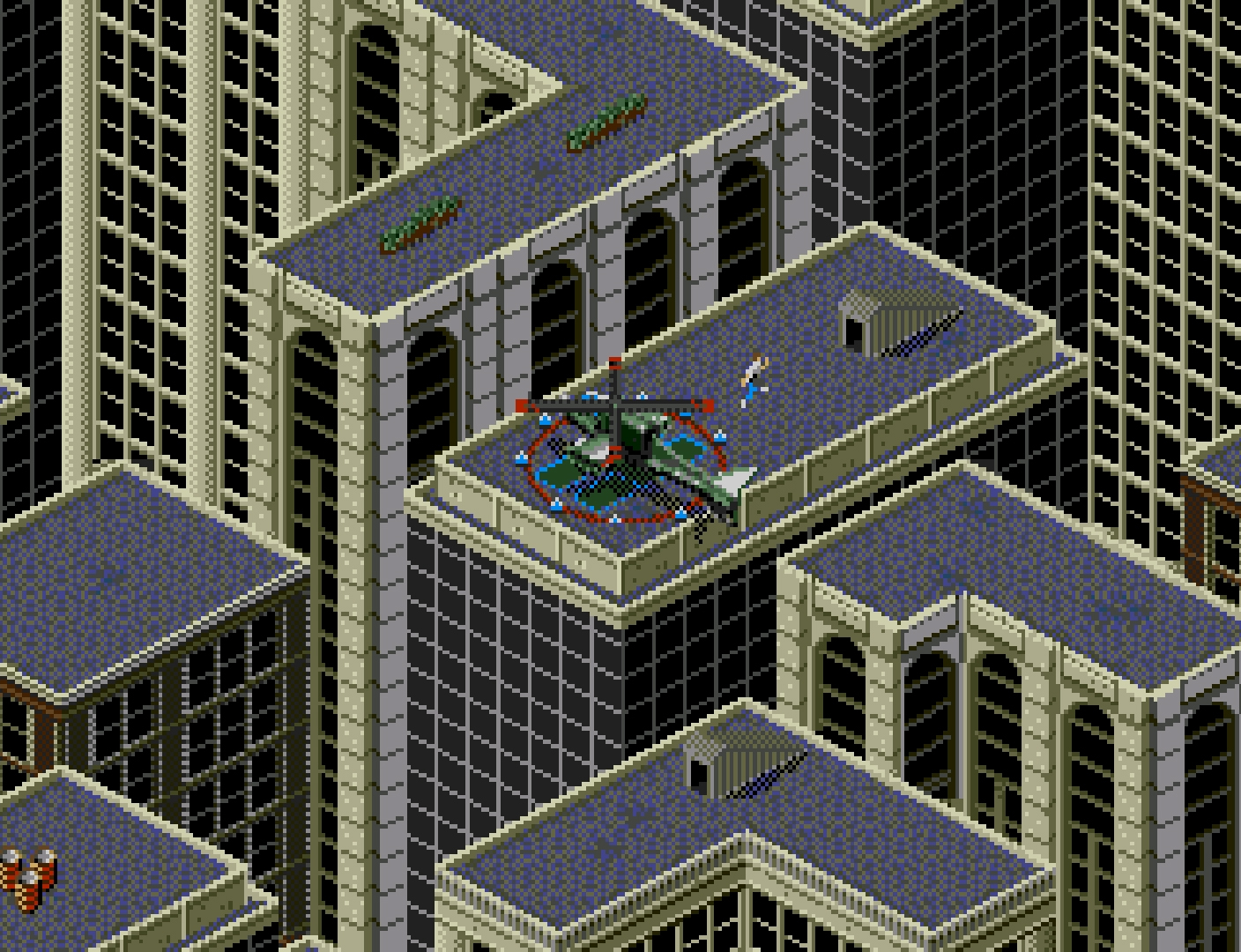
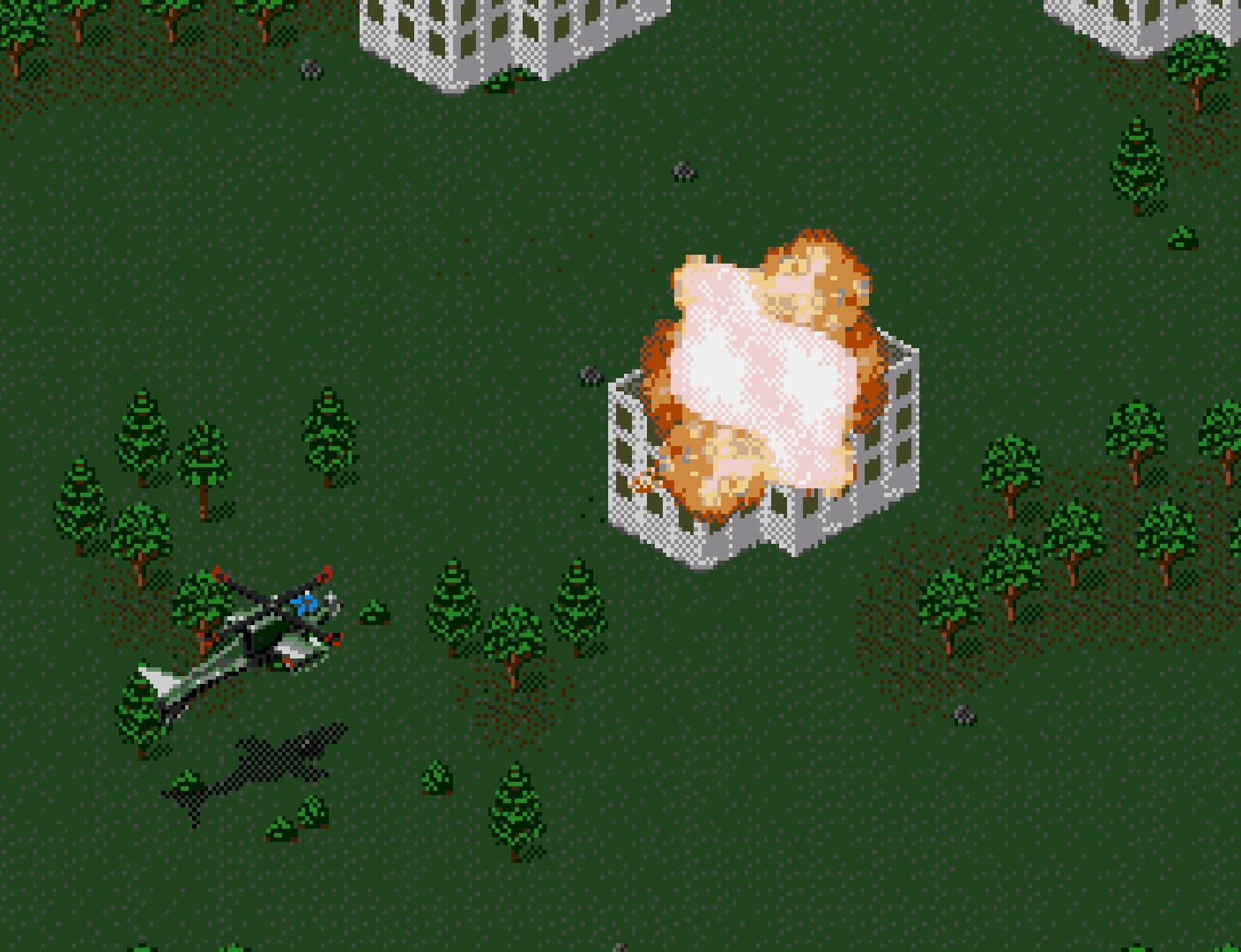
Visually, Urban Strike showcases a colorful presentation and I would say its the best looking game up to this point. The environments are well detailed, the vehicle and enemy sprites look great, and the explosions look amazing. As for the audio, the sound work gets the job done and once again, no music is heard during gameplay but I did enjoy the tunes heard at the main menu and during cut scenes. On the technical side, the game performed well and I encountered no major issues.
I feel Urban Strike could have been the best entry up to this point but I would say Jungle Strike maintains its position at the top. For me, personally, the on-foot stuff really brings Urban Strike down. Not enough to make it a terrible game but it would have been much better without it. Urban Strike is easily the most accessible entry so far mainly because it’s not brutal right out of the gate and I really can’t knock it for that but as a result, the early campaigns don’t feel quite as rewarding as you might expect from a Strike game. Much of the fun comes from overcoming tough challenges and that’s how it was in Desert Strike and Jungle Strike from beginning to end. Every campaign tests your skills and forces you to think. Urban Strike is much more forgiving in the early goings and I basically blazed through the first two campaigns without really having to worry all that much about my fuel and ammo and even enemies. I am, of course only referring to the standard campaign maps, not the on-foot areas. Ultimately, I still had a good time with Urban Strike, overall. I love the selection of maps and the helicopter action is great. Jungle Strike introduces different vehicles and even though I’m not the biggest fan of them, they do add variety to the gameplay and once you get the hang of them, there is some fun to be had as opposed to the on-foot action in Urban Strike which just blows, whether you get the hang of it or not. While the concept is interesting, the execution is poor and does bring the game down a bit. So Urban Strike only cements my feeling that the gameplay is at its best when you’re in the air.
I do recommend Urban Strike to anyone looking for a fun tactical action experience and to fans of the previous games. I would also recommend it as a gateway to those looking to get into the series. Only because it’s the most accessible one so far. The early campaigns are more forgiving than anything on offer before and will ease you into the experience and hopefully prepare you for the brutality that comes later. I don’t think its quite as good as Jungle Strike but it is a fun time, overall, and despite the terrible on-foot action, Urban Strike has enough going for it to make it a worthy entry. Definitely check it out.