
Check out our video review:
The Strike series was pretty popular back in the day and it all started with Desert Strike: Return to the Gulf. I’ve heard it referred to as a shoot ’em up but I think tactical shoot ’em up is a more accurate description. Yes, you get to fly a helicopter around and shoot and blow things up but it’s also a tactical game that requires thinking. It will kick your ass if you don’t know what you’re doing. Desert Strike showcases some pretty cool stuff for the time it released including open-ended environments that you can fly around freely and you can complete missions in any order. If you take the time to learn the mechanics and have the patience to endure repeated failures, Desert Strike proves to be a very rewarding experience. The game was a big success and spawned a sequel, Jungle Strike. Developed by High Score Productions and published by Electronic Arts, Jungle Strike was released for Genesis in 1993 and has been ported to numerous systems over the years. For this review, I played the Genesis version.
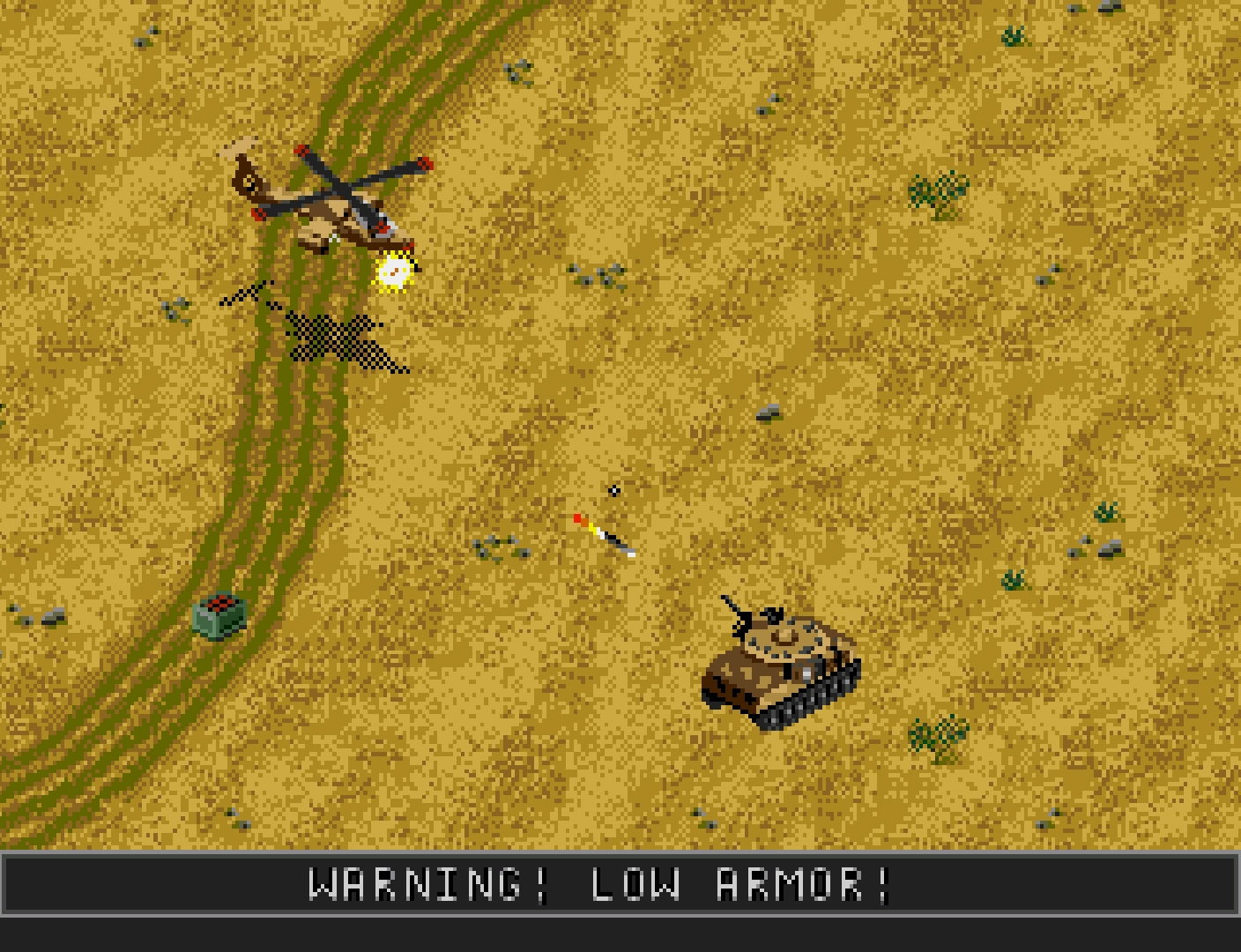
The story in Jungle Strike centers on two terrorist leaders, the son of General Kilbaba from Desert Strike and a drug lord. The two dislike the United States for their own reasons and team up and send their forces to attack Washington D.C. A lone special forces pilot repels the attack in a Super Comanche Attack Chopper and then proceeds with numerous counter-attacks. Much like its predecessor, the story isn’t super deep and is primarily conveyed through cut scenes and text.
Jungle Strike plays out in campaigns and is longer than its predecessor. There’s nine campaigns, each with their own missions to complete. If you’re a veteran of Desert Strike, you should be able to get the hang of things pretty quick. While the core mechanics have been carried over, there are differences and I would say the gameplay here does feel better and smoother. There’s only two control options in Jungle Strike; “with momentum” and “no momentum”. I played for a bit using the “no momentum” option but eventually switched to “with momentum” and just stuck with it. Controlling the Comanche and other vehicles did take me some time to get used to, especially playing this fresh off Desert Strike which I played using its “from above” control option which is not available in Jungle Strike. Strafing or “jinking” and firing weapons simultaneously still feels a bit awkward on the Genesis controller but I expected as much and I still got my ass kicked repeatedly.
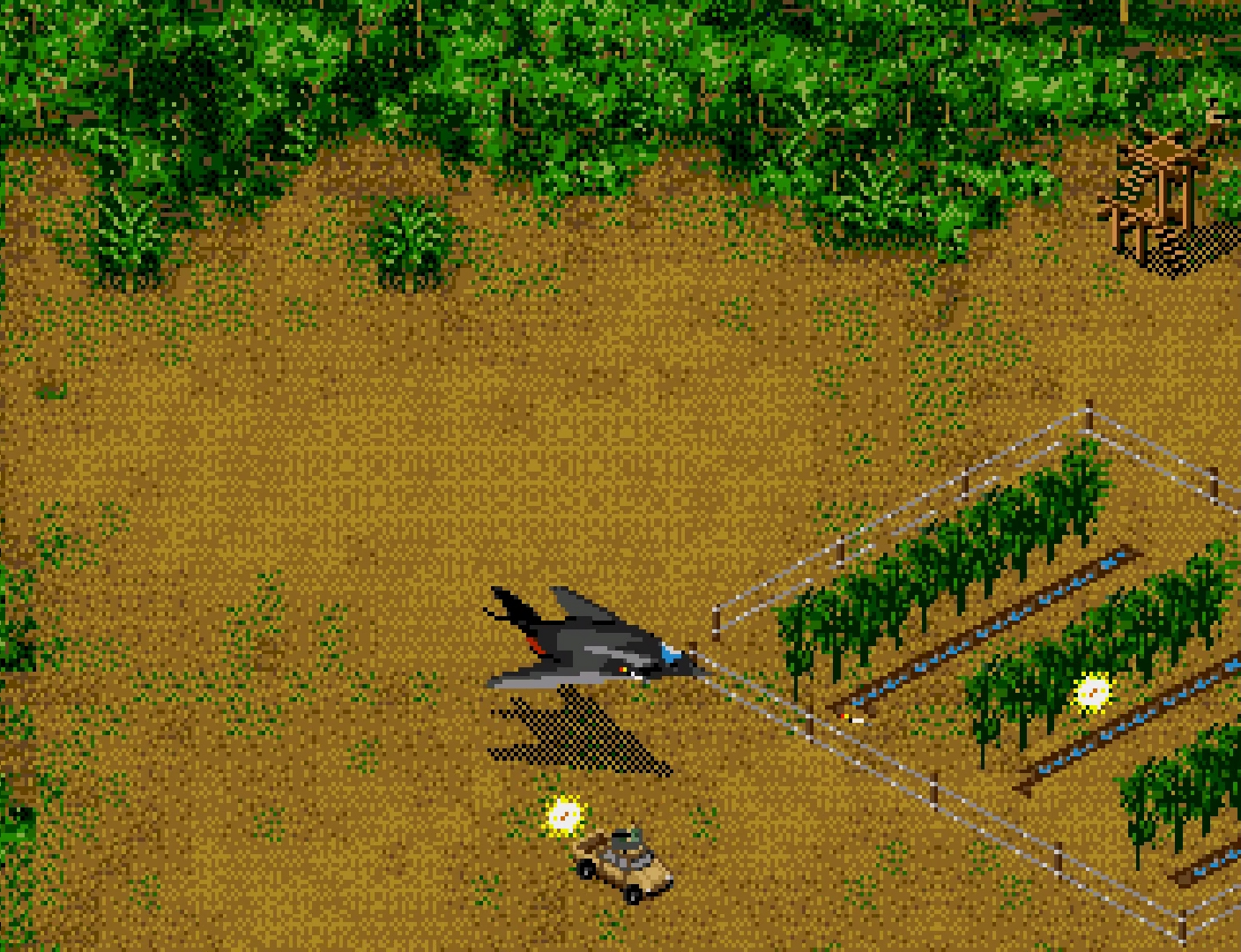
A big new feature introduced in Jungle Strike is controlling multiple vehicles. In certain campaigns, you’ll have to land the helicopter and switch to another vehicle. These include a hovercraft, attack motorcycle, and stealth fighter. Honestly, I didn’t find any of these to be as enjoyable as the Comanche but I would say the stealth fighter is arguably the most fun out of the three if only because it doesn’t need to refuel and has infinite ammo. If you can control this thing well, you can easily decimate enemy forces. It does move fast and crashing into anything results in it exploding and it can be very frustrating until you get the hang of it. I think the hovercraft is the worst mainly because you have to slow down to a crawl to nab pickups. If you’re moving too fast, you’ll crash into whatever the pick up is and destroy it. It happened to me more often when I was playing with the “no momentum” control option and I seemed to destroy a lot of pickups when approaching them from certain angles. At least when using that control option. I found it to be very annoying. Even though I’m not the biggest fan of the additional vehicles, I admit they do add more variety to the gameplay and that’s not a bad thing at all.
Other than the new vehicles and locations, Jungle Strike is basically more of the same. I still say the gameplay falls under the tactics and strategy umbrella. It is unforgiving and requires patience. It’s a very trial and error experience. You should study the maps to know where things are and what enemies to prioritize and avoid, plan out your approaches, and figure out the best and most efficient ways to complete missions. All your vehicles minus the stealth fighter have limited fuel and ammo. So engaging every enemy you come across on the way to a destination may not be worth the fuel and ammo cost. If you run out of fuel, you crash and lose a life. If all your armor is depleted, you lose a life. Lose all your lives and it’s game over. Like ammo and fuel pickups, Armor Repair pickups along with Extra Lives can be found in the environments lying around or are revealed by destroying things like buildings. You can also replenish armor by dropping people off at landing zones. Jungle Strike on Genesis uses a password save system so you can continue from whatever campaign you made it to or simply replay certain campaigns by entering the appropriate passwords.
Before jumping into a campaign, you can select one of multiple copilots. They come with their own strengths and weaknesses and some do need to be found and rescued before they can be selected. Each campaign can be considered a level and they come with multiple missions. You’ll primarily be destroying things and rescuing and capturing people just like in the previous game. You’ll also have to protect things from time to time and certain missions can only be completed with specific vehicles. Missions can be completed in any order and completing certain ones will make others easier. Most mission targets are visible on your map which you can reference at any time. But not all and the ones that aren’t will require you to gather intel before they are revealed. Campaign 4 is a standout and I feel for two reasons. One is because it’s set at night so it can be hard to see certain things and the other is because fuel and ammo are not visible on the map. You’ll have to find them yourself and/or find and capture the enemy commander who will reveal them.
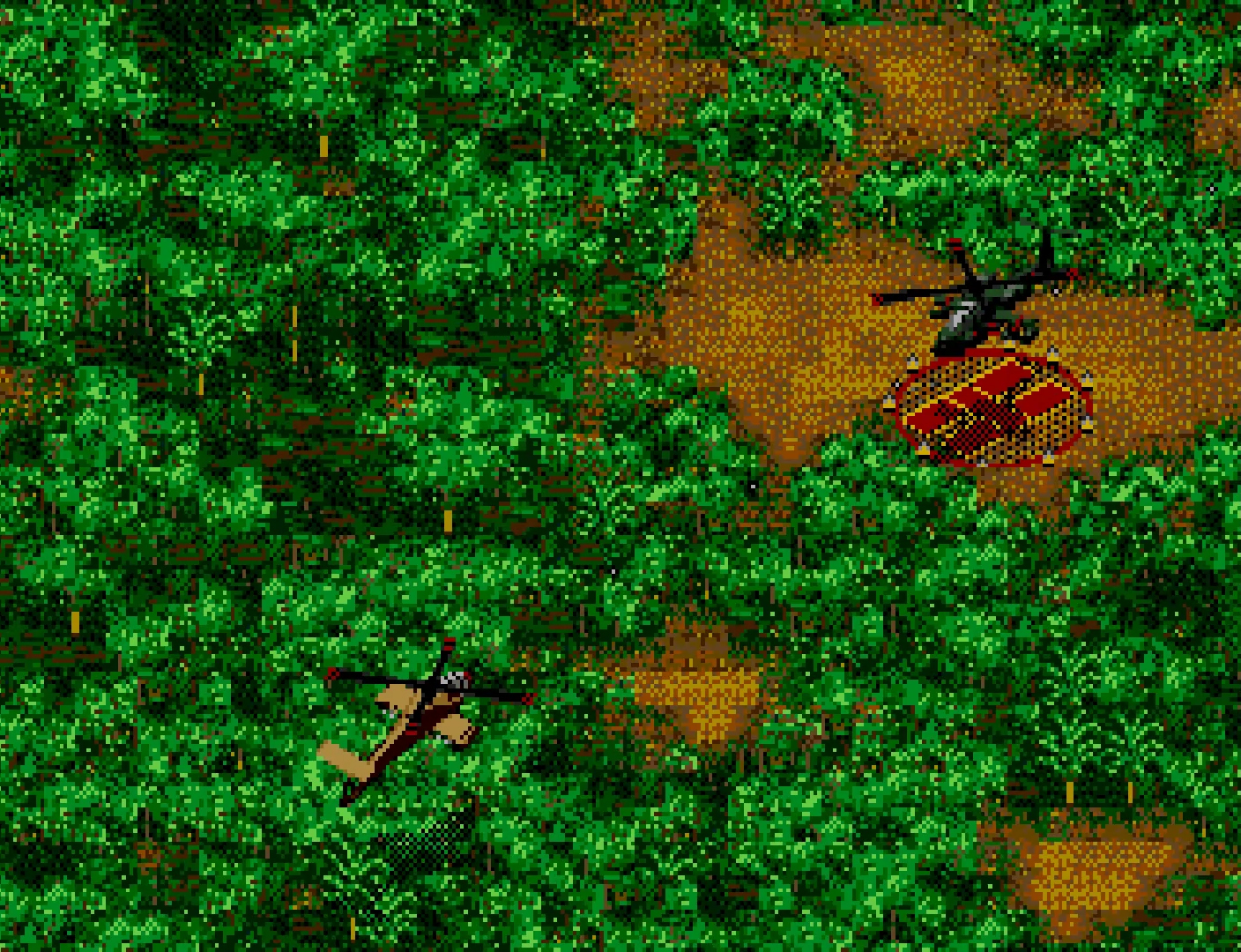
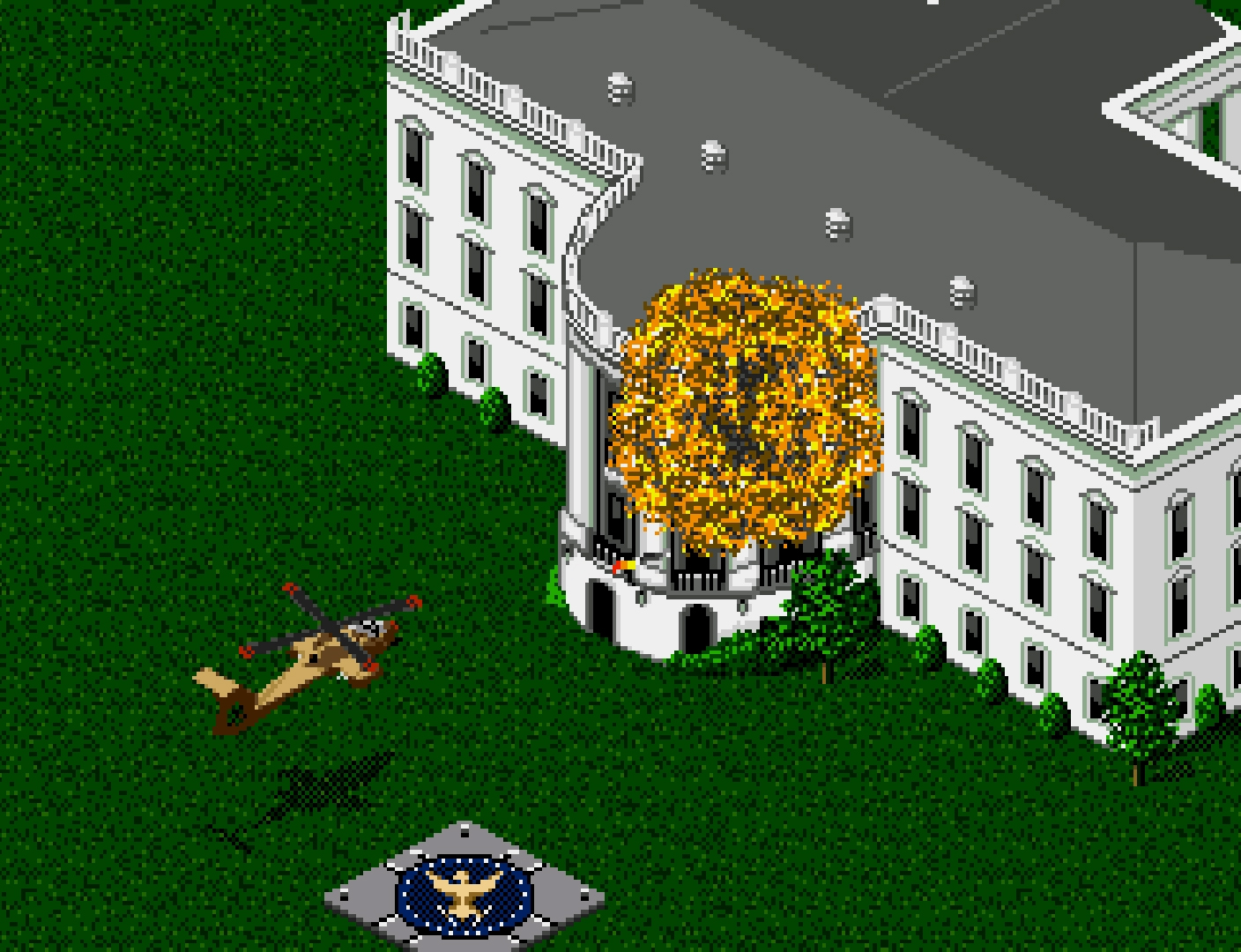
Despite the name, Jungle Strike does not have you flying around only jungle environments but also Washington D.C. and a snow fortress among others. The game showcases more environmental variety than its predecessor. The maps are open-ended which means you have the freedom to go anywhere you want. I see this kind of freedom or nonlinear gameplay as the big draw of these games resulting in plenty of replay value. How you go about completing missions in one run may be different than how you go about it in another. You’re not restricted to following a specific path or doing the same thing the same way every time. If the punishing gameplay doesn’t make you rage quit, it will force you to replay campaigns over and over again and you’ll have to learn new strategies and ways to overcome challenges. And when you finally do complete a campaign or mission that you’ve been struggling with for a while, it can be immensely rewarding.
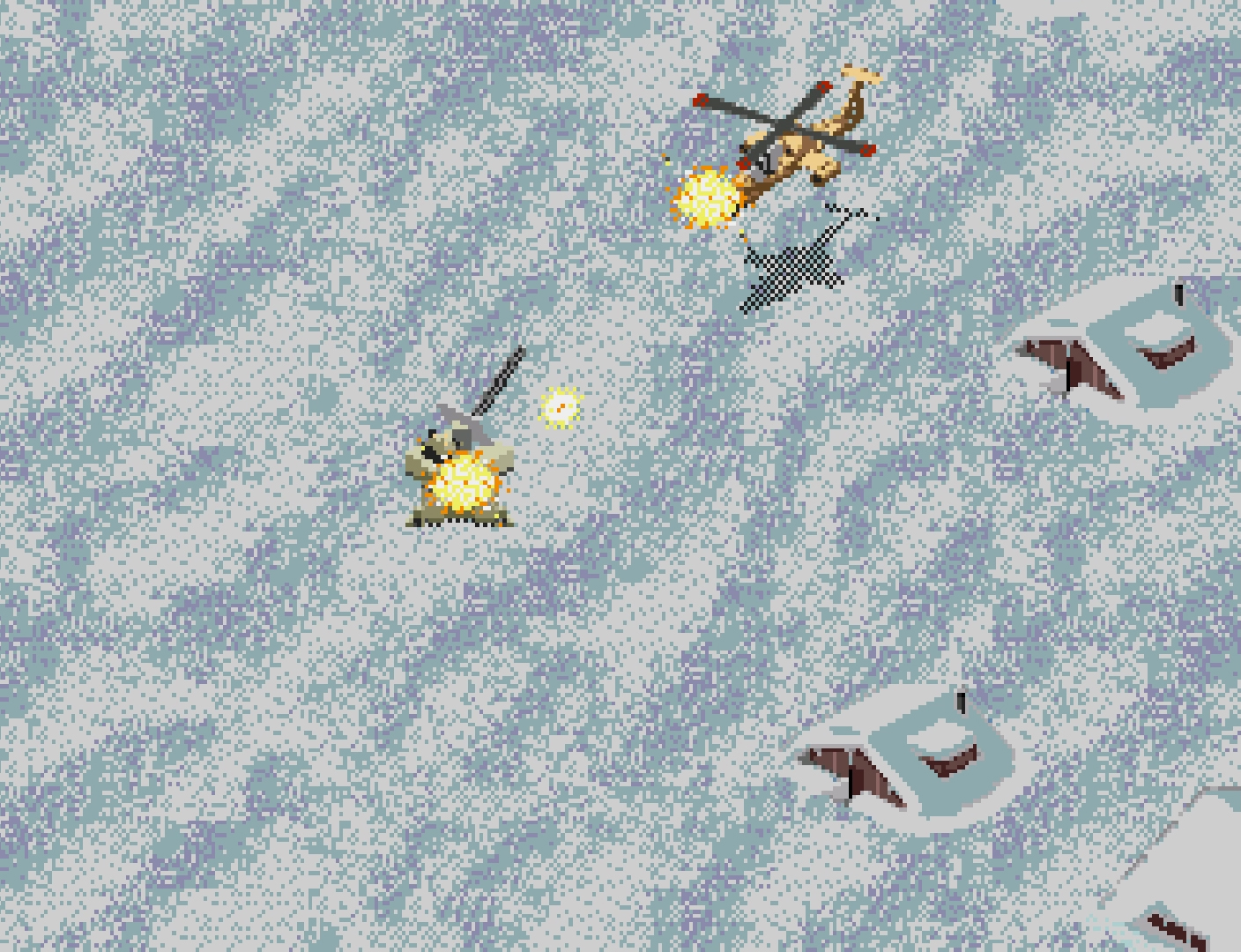
Jungle Strike showcases a colorful presentation and that along with the environmental variety results in a good amount of visual variety. Certainly more than Desert Strike. Instead of a lot of brown, you’ll see a lot of green this time but also more detailed environments, explosions look better, and there’s some cool details on display. For example, ground troops will bleed when they’re shot and in Campaign 4 which is set at night, attacks will illuminate the area. It’s a nice touch. As for the audio, once again there is no music heard during gameplay but the tunes heard at the main menu and during cut scenes are pretty jamming. On the technical side, I do feel Jungle Strike performs better and runs smoother than its predecessor and I encountered no major issues.
Jungle Strike is an excellent game and fantastic sequel. It’s also unforgiving and very trial and error. You need patience to get through it. Or you can cheat. I had a great time with it and I do think it’s better than Desert Strike. I can’t say I’m a huge fan of the new vehicles but at the very least, they don’t overstay their welcome and are a nice way to mix up the gameplay. I really enjoy the game’s nonlinear design, the freedom on offer. It encourages the player to come back and experiment with different approaches. Jungle Strike is tough and if you don’t take the time to learn how to play it properly, you’ll most likely struggle to progress. Even with more campaigns than its predecessor, it’s still not technically a super long game. That is assuming you can get through every campaign in one sitting without issue. You’ll most likely play campaigns over and over as a result of repeated failures. It can take quite a bit of time to complete one. You need to not only figure out the best and most efficient ways to complete missions but also stay alive which can be quite challenging. If you have the patience to endure the kind of punishment Jungle Strike imposes, you’ll be in for a very rewarding experience.
I absolutely recommend Jungle Strike. It retains everything that made the first game great, feels better to play, and expands upon some things resulting in more variety. It also doesn’t hold your hand and will punish those that don’t take the time to learn how to play it properly. If you’re looking for a traditional shoot ’em up where you can basically hold the fire button down the whole time and blow everything up, you might want to look elsewhere. But if you’re looking for a more strategic and tactical action experience that rewards thinking and patience, Jungle Strike may just be the game for you. Definitely check it out.