
Check out our video review:
One of my favorite mods of all time is Arcane Dimensions for Quake. It’s a community-made map pack featuring numerous large beautifully designed maps, new weapons and enemies, and an interesting mix of Quake’s Lovecraftian horror elements with dark fantasy. It makes for an incredible action adventure with plenty to see and discover and what sticks out to me the most is the fantasy stuff. I just love how they did it – the tone, atmosphere, enemies – it’s unlike anything I’ve experienced. And before people start hurling game titles at me like Heretic, Hexen, and Amid Evil – I’m well aware of those and they’re not the same. Not to me, anyway. Sure, Arcane Dimensions shares similarities. Hell, it even borrows stuff from some of them like Hexen II, for example, but it still feels different to me. I think it’s very unique and I simply fell in love with its mix of Quake horror and fantasy. Every time I play it, I want more of it, so when I discovered Quake: Mjölnir, I jumped on it immediately.
From what I understand, Quake: Mjölnir is inspired by an early concept for Quake wherein the player would wield Mjölnir, Thor’s hammer, and explore a medieval world of magic and monsters, and that’s basically what this mod is. A mix of Quake’s horror with fantasy based on Norse mythology. Quake: Mjölnir is powered by Keep, a mod and toolset containing a massive compilation of features from across the Quake community, and Arcane Dimensions serves as the primary base. Basically, Quake: Mjölnir incorporates content from other mods including Arcane Dimensions, Drake, and Arms of Asgard. As of this review, version 1.0 and patch 1 are available to download and you’ll need a community-developed engine or source port to run it. I played it using Ironwail which is a fork of Quakespasm. I heard a lot of good things about Ironwail so I decided to check it out and in the end, I’m very impressed with its capabilities. What’s really cool is it will automatically detect the Quake re-release or enhanced content without any setup so it’s extremely easy to get running. But, of course, you should read any and all instructions before installing anything.
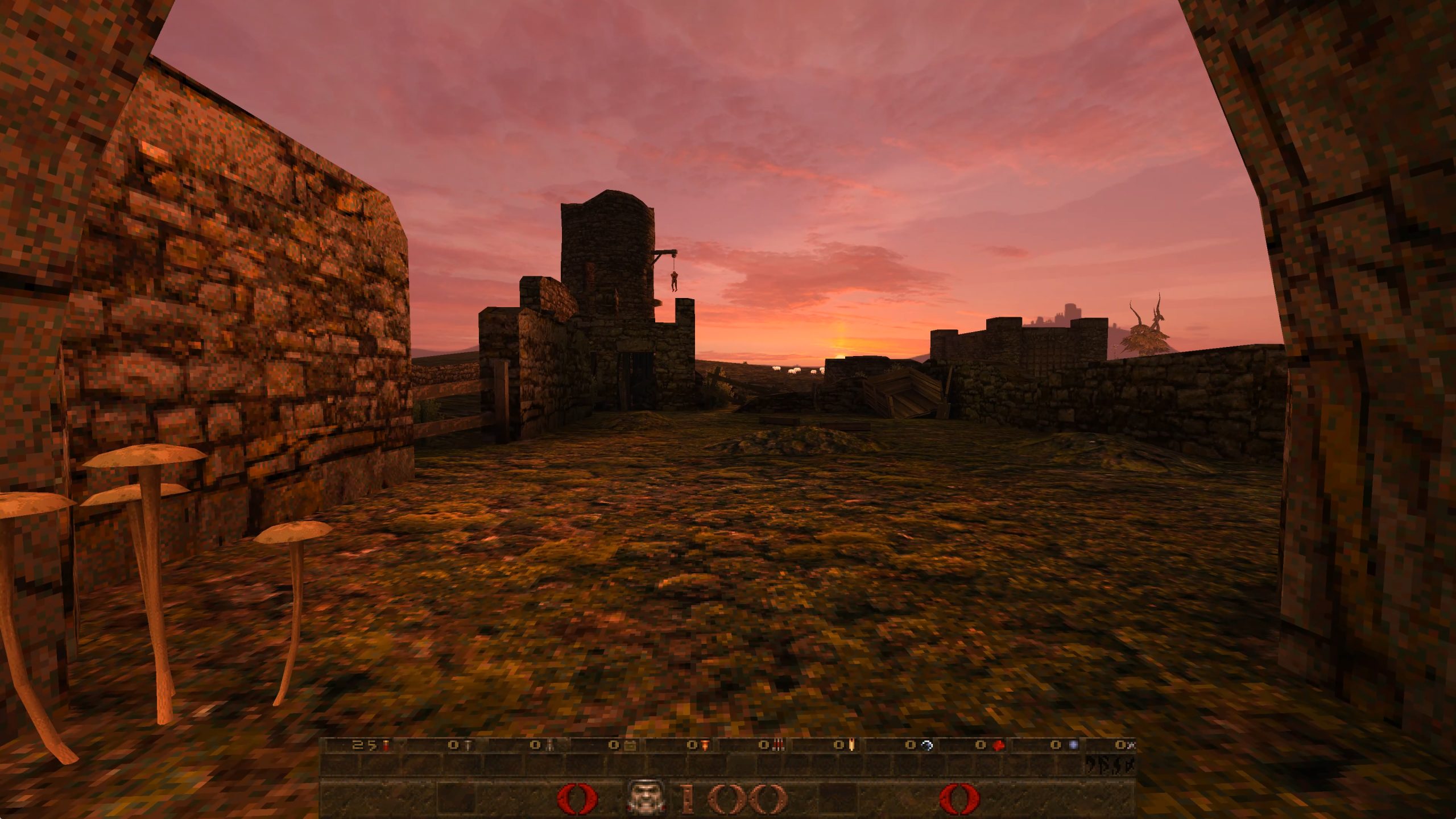
Quake: Mjölnir comes with a detailed PDF manual and I highly recommend reading through it. For one thing, it contains installation instructions which you should absolutely read if you’re unfamiliar with installing mods. It also provides information on the story, weapons, enemies, pickups, and the mod’s unique features. One thing I really like about this mod is the World Map. After completing a level or map, the World Map unfolds and shows you where you’re going next. The World Map, itself, is hand drawn and painted by artist Mackenzie Stewart and the art was displayed as part of the Creation Myths of the North: An Exhibit of Student Artwork in 2022. Personally, I love the art style, coloring, and I think it gives the mod a unique charm as well as fits the other artistic aspects and aesthetics including the texture work, geometry, and architecture. Much like Arcane Dimensions, I often found myself simply admiring what’s on display in Quake: Mjölnir, especially in Episode 4. On numerous occasions, I stopped to take in my surroundings and just appreciate the art and effort that was put into everything. The textures, architecture, lighting, effects, even the music – it’s all exceptional.
The story goes that things go horribly awry during slipgate testing and unknown enemies have infiltrated our bases to kill and kidnap people and steal our weapons, research, and resources. So you’re sent into enemy territory to defend Earth. That’s the gist of the story taken from the manual. There are multiple difficulty levels and a hub area with portals to different episodes and as you explore, you’ll come across books or tomes that provide tidbits of information, lore, and contribute to the narrative. Basically, the story is here is if you want it but the gameplay is always front and center. However, I do suggest reading whatever books you come across and the text that appears on the screen because much of it can be helpful.
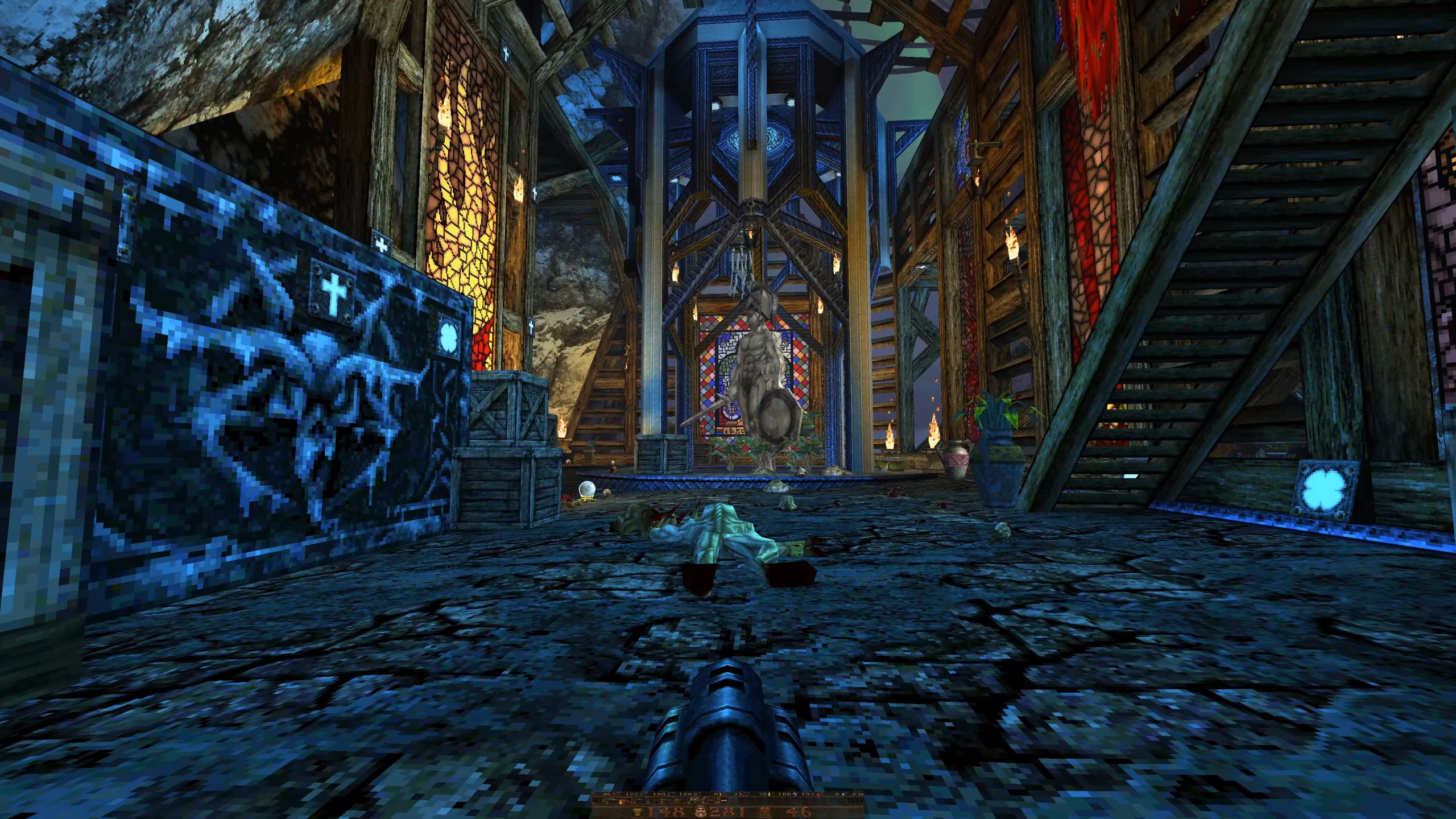
Quake: Mjölnir presents a world designed in a way that makes it easy for someone like myself to get lost in. I don’t mean “lost” as in unsure of where to go (although that can happen here) but “lost” as in absorbed into the world. I was basically wandering through maps and jumping through portals, exploring and slaying foes without any real knowledge of anything besides what’s offered in-game. Admittedly, I didn’t read through the manual before playing because I had found instructions for installing and running mods through Ironwail from another source so it was maybe a couple of hours before I opened the PDF. And even then, I quickly scrolled through it to find the names of enemies and weapons, missing some crucial information in the process.
What I’m trying to say is I completely skipped the part that states Episodes 1 and 2 are not included in v1.0 nor did I pay any mind to the fact that it’s recommended to play through Episode 3 first. I played through Episode 4 and then 3. The portals to the first two episodes are not working which is made clear in-game but I figured I had to unlock them and the episode numbers just didn’t register with me at first because I was so engrossed in exploring and seeing what the maps have to offer. It wasn’t until I beat the included episodes and wasn’t sure what to do next that I decided to take another look at the manual.
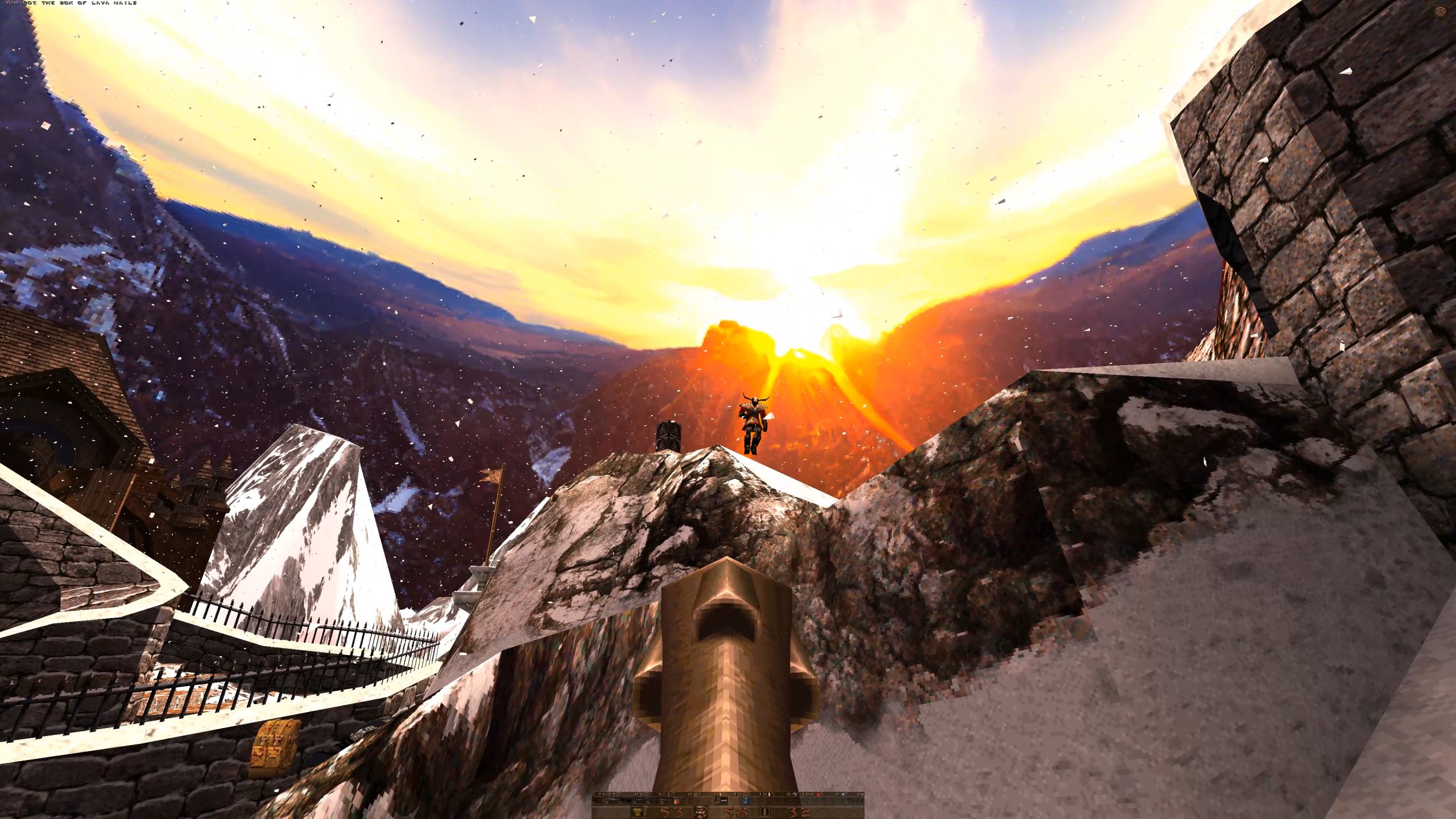
Playing Episode 3 first is recommended because it features short simple maps. Episode 4’s maps, on the other hand, are massive and much more complex. So the takeaway here should be to read the manual before playing. In my case, doing that would have saved me some time at end of my playthrough. Instead, I spent it running around in circles trying to figure out what I missed to unlock the first two episodes which are simply not available yet. But that’s my fault. Although, I am curious why they released Episodes 3 and 4 first. Considering how much simpler Episode 3’s maps are compared to 4’s, I’m very curious how the maps of Episodes 1 and 2 will be crafted.
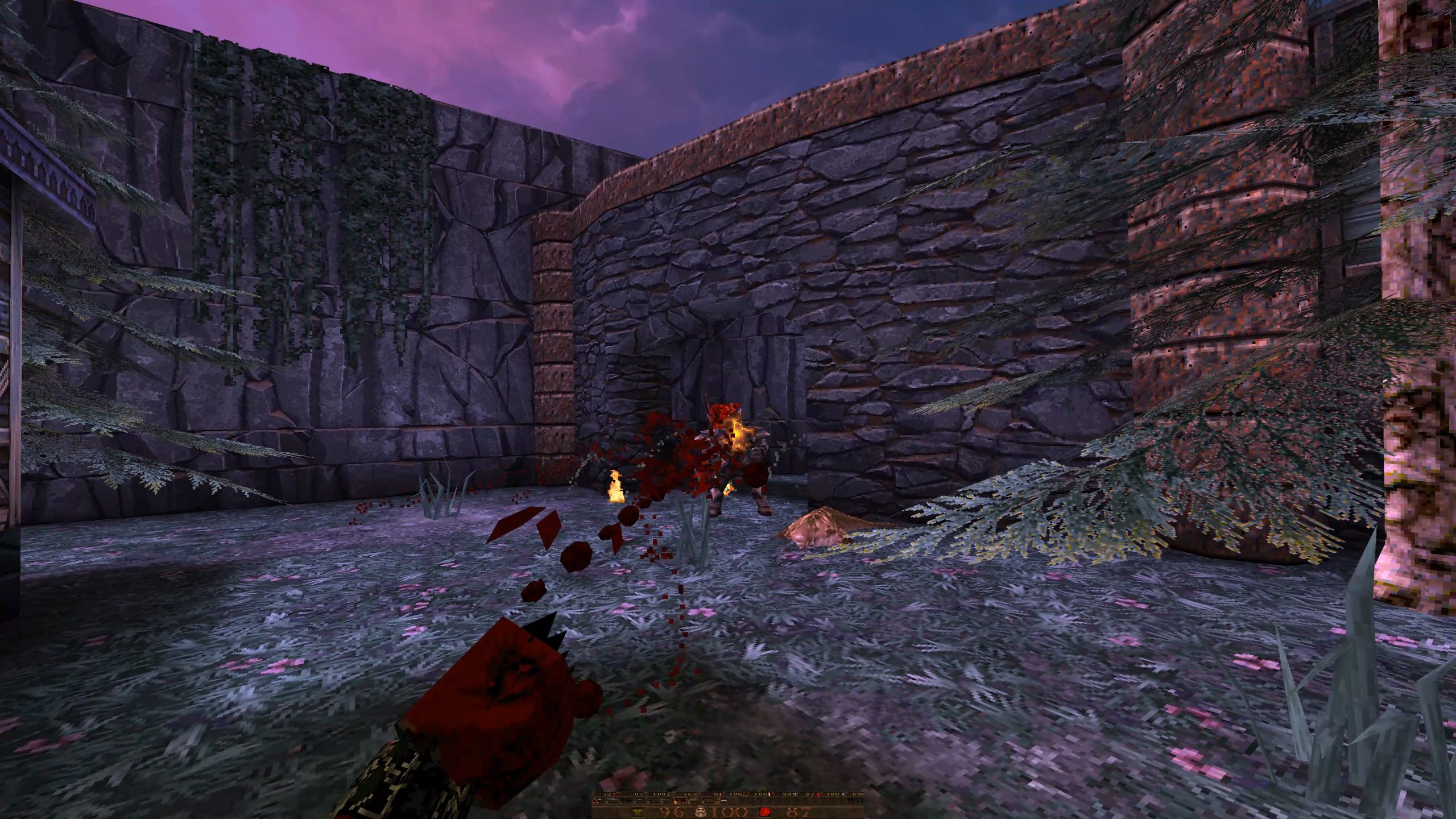
Quake: Mjölnir features a wide array of new weapons and new enemies to blow away and that’s in addition to the vanilla arsenal and enemy roster. I think this stuff really helps drive the fantasy elements along with the atmosphere and tone of the maps. There’s new variants of existing foes along with goblins, gremlins, shufflers, sorcerers, troglodytes, and new flying foes like imps and dragons. You can blow away all the new fantasy creatures with new fantasy weapons including bows, staffs, and vampiric and holy weapons including the titular Mjölnir, Thor’s hammer. There’s also some new explosive firepower and variants of existing weapons including a flak cannon, sidewinder, multi-grenade launcher, multi-rocket launcher, and lava nailguns, among others. I think some of the bows could use a little more oomph to make them feel more satisfying but, overall, I would say the expanded arsenal is great and helps balance out the new enemies and their attacks and behaviors.
Episode 4 is by far my favorite. The maps are massive and intricate but ripe for exploration. They’re the kind of maps where you can find and stumble upon numerous secrets thinking you found them all or most of them by the end only to reach the exit and discover you didn’t even find half. But the exploration goes beyond just finding secrets. Pickups are everywhere and there’s seemingly goodies around every corner. These include weapons, ammo, health, armor, key items, and even magic artifacts. Some maps even have shrines that can augment your abilities. I don’t know if it was because of artifacts or shrines but after about an hour of playing through one map in particular, I discovered I was able to multi-jump which makes navigating certain areas much easier. I was just so engrossed with exploring and distracted by the action that I simply missed the part where I unlocked this new ability.
You’ll need to push buttons and find key items and some maps require you to complete sequences of events to progress. Much of your time with this mod will probably be spent in Episode 4. The maps feel more like giant worlds rather than traditional levels. Giant worlds with numerous areas to explore. There are things to find and interact with, bounce pads, teleporters, and elevators and cable cars to ride. That said, some maps are so big and intricate that it can be easy to get lost and stuck. I think I spent about two hours in one map and a good chunk of that time was spent trying to figure out where to go. I’m not going to say the level design is super maze-like but the maps are just so big, intricate, and detailed that it can be hard to remember where everything is on a first run. I would come across a locked door and then find the key somewhere else later on and oftentimes I forgot exactly where the door was and/or how to get there. Other times, I simply missed certain areas. Some maps are very non-linear so there’s multiple ways to reach certain destinations and it can be easy to get sidetracked or miss areas and items entirely.
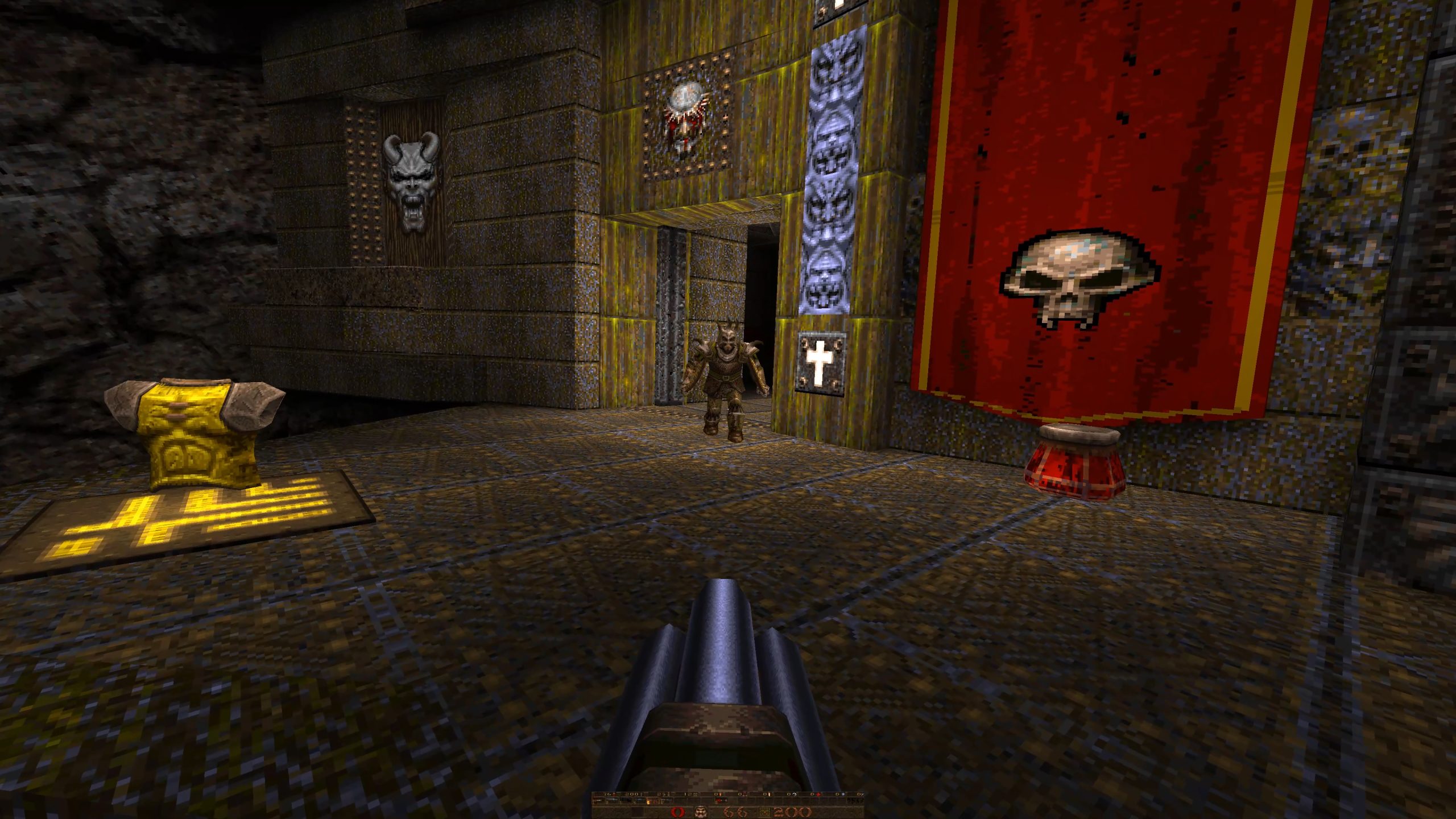
After Episode 4, I jumped into 3 and, needless to say, I was a little disappointed. Not that the maps in 3 are badly designed but they’re just not as vast as those in 4 and I was really enjoying exploring the massive world-sized maps. But that’s my fault because I didn’t read the manual or pay attention to the episode numbers. Nevertheless, Episode 3’s maps are exceptionally well crafted and are more in-line with, I’ll say traditional level design. The maps are much shorter and simpler than those in Episode 4 but don’t take that to mean that they’re bland and uninteresting. Far from it. There’s a lot of cool details that brings these maps, and every map in this mod, to life. Quake: Mjölnir is an immersive and engrossing experience.
The audiovisual presentation is excellent. From the textures to the models to the music – it’s all wonderful. Each map feels distinct, the weapon and enemy models look cool, the architecture of the various buildings and structures is simply beautiful, and the action is backed by an excellent soundtrack. Instead of dark ambient soundscapes like you hear in vanilla Quake, Quake: Mjölnir includes catchy, adventurous, and even dramatic-sounding tunes that I think fit the mod’s overall theme. The tunes also help drive the unique atmospheres and tones of each map. The texturing and lighting is superb and the maps showcase all kinds of objects and details like statues, foliage, and decals that make areas pop and look interesting. On the technical side, the game ran smooth and I encountered no major issues.
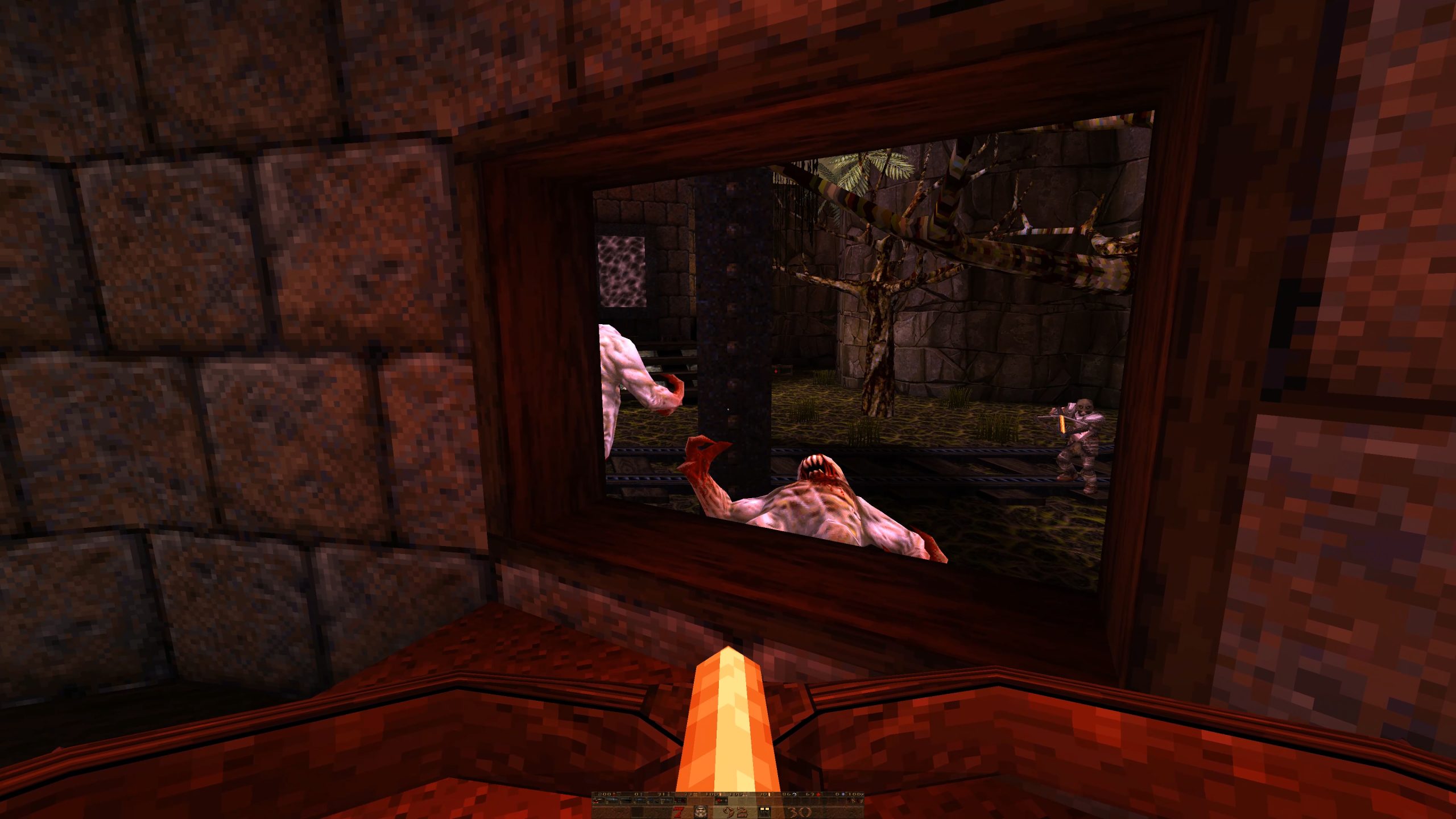
Ultimately, I had an absolute blast with Quake: Mjölnir and I can’t wait to play the finished product. But I feel I should say that if you’re looking for a mod that simply provides more Quake, I don’t think Quake: Mjölnir will scratch that itch. Yes, it’s more Quake in the sense that it contains some vanilla Quake assets but the whole feel of it is different. It’s got all kinds of new stuff. Now I say this because I found a discussion about the mod, I think on Reddit, and one player took issue with the fact that “it doesn’t feel like Quake”. Personally, I think that’s an odd complaint considering it’s a mod. A mod that clearly establishes its style and intentions in trailers, screenshots, descriptions, and the manual. So I don’t know what that person expected but if you’re looking for a mod that provides something more in-line with vanilla Quake and its official expansions, you may want to look elsewhere. It’s not even complete yet and Quake: Mjölnir has become one of my favorite mods for Quake. It showcases incredible work and effort and satisfied my desire for more Quake mixed with fantasy.
I absolutely recommend Quake: Mjölnir. It’s an incredibly well made map pack by a clearly talented group of people. Everything about it is simply top notch. I guess the only real negative is it’s not finished yet. With Episodes 3 and 4 as good as they are, I’m very excited to see what Episodes 1 and 2 will offer. I do hope the map designs lean more towards that of Episode 4 because I enjoy the exploration and sense of adventure but I’m sure however they turn out, they’ll be excellent just based on what I’ve experienced so far. So definitely check out Quake: Mjölnir.